Identifying Plants with Rohr’s & Replacing Trees in October
If you’re not sure what plants you have, we have a lot of new first- time homeowners that come into the nursery, they’re like, I don’t know what this is. And so they’ll take a picture of it on their phone or their iPad, bring that in. And we’ll say, okay, this is what this is. This is how you want to take care of it. This is when you want to trim it. This is when you want to fertilize it.
We have a lot of employees that have 25 to 30 years experience. That matters for getting the right information the first time. And we still get stumped sometimes, but actually we kind of enjoy that because we definitely like to dig and play detective and figure out what it is.
I had somebody call me the other day. They’re like, I got this fluffy pine tree from you about 10 years ago. The descriptions are sometimes fun. I’m like, hmm, all right, can you send me a picture? And he sent me a picture and it was really rare, it’s actually in the bald cypress family. It’s called a Peve Minaret and it’s extremely rare. They are unfortunately very expensive, and they had some damage happen on this one and they wanted to replace it. That is something that we do have coming in for the spring.
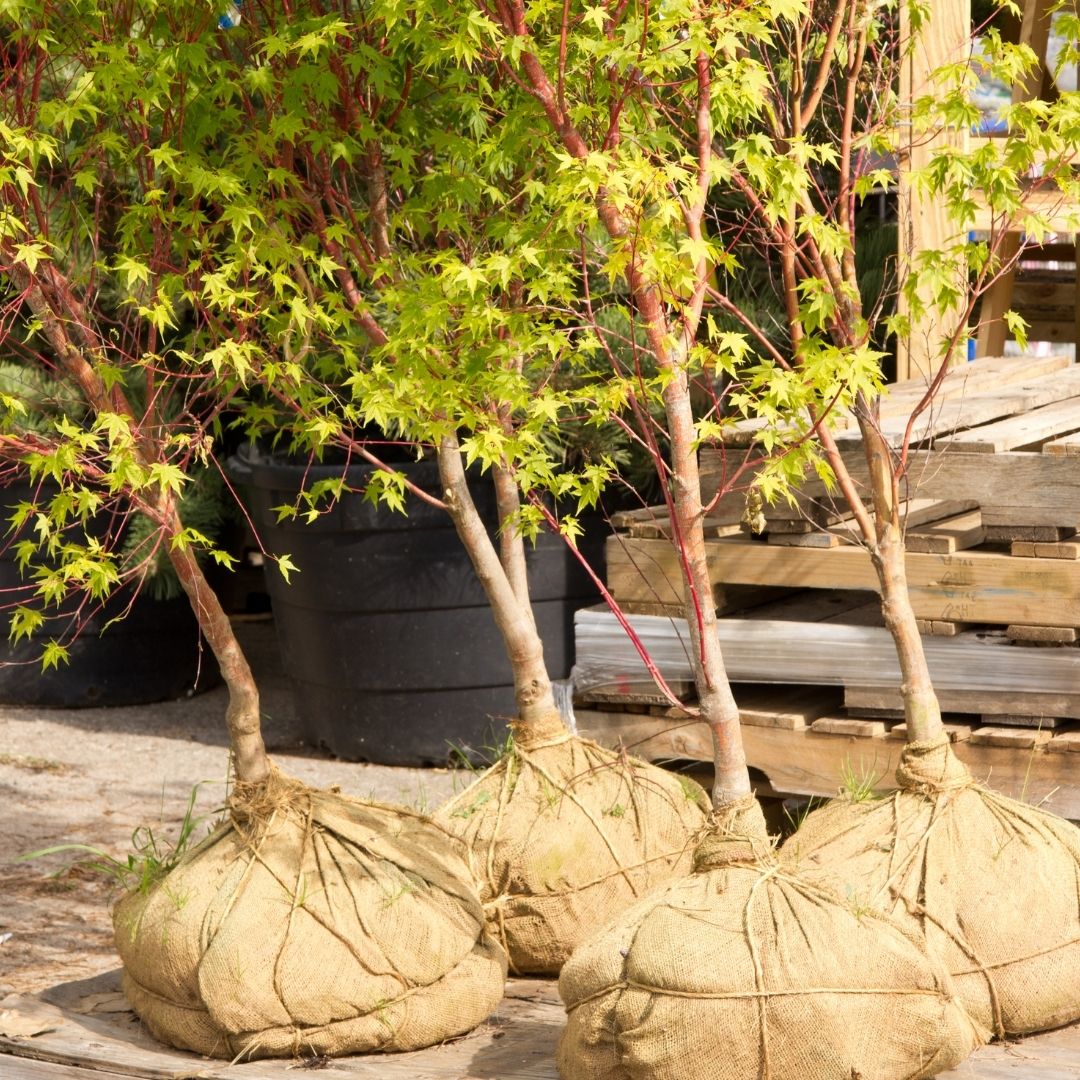
We are out this time of year, and it’s not a good plant to dig in the fall. There are certain plants that can be dug in the fall and moved and other plants that can’t. So everything we have at the nursery right now was dug in the spring. It can be transplanted anytime, but it can’t be dug out of a field in the fall without risk of damage. And we know all those rules. And as we cool down here, a lot of the bigger trees, like we have two and three and four inch maples, these trees are 18 feet tall to start. And the root balls weigh 1,500, 2,000 pounds, so a ton just on the root mass itself. And it has to be that big, otherwise the top would blow the tree over all the time. So the bigger the top is, the bigger the root system needs to be to keep that yin and yang, balance that, right. And so this is a great time of year to move those big trees and get them out into the yard.
And when the first frost comes next week, everybody thinks all the plant’s done growing for the year. The part you can see is done growing. The root system will actually grow for four to six weeks after the first frost. And that new root growth in the fall is why we get new top growth in the spring. We wouldn’t have new top growth if we didn’t develop the roots in the fall.
Questions? Email us at [email protected] or call one of our two locations: Portage (330-499-0101) or Everhard (330-492-1243).