Insects & Red Thread Fungus
Aphids
So, at the nursery here, we’ve been seeing quite a bit of aphids this year, more so than normal. Insects are like a clock pendulum. You’re going to see them sometimes, you’re not going to see them other times, but again, the environment allows these insects to proliferate sometimes. It’s just the right situation for them to do well.
So, if you have burning bush, which is a pretty common plant in most landscapes, watch the tips of your burning bush. They’re little black bugs. They’re on the underside of the leaf, and the tip of the leaf will curl, and so that’s one of the telltale signs to look for. As you check out your landscape, keep an eye on that.
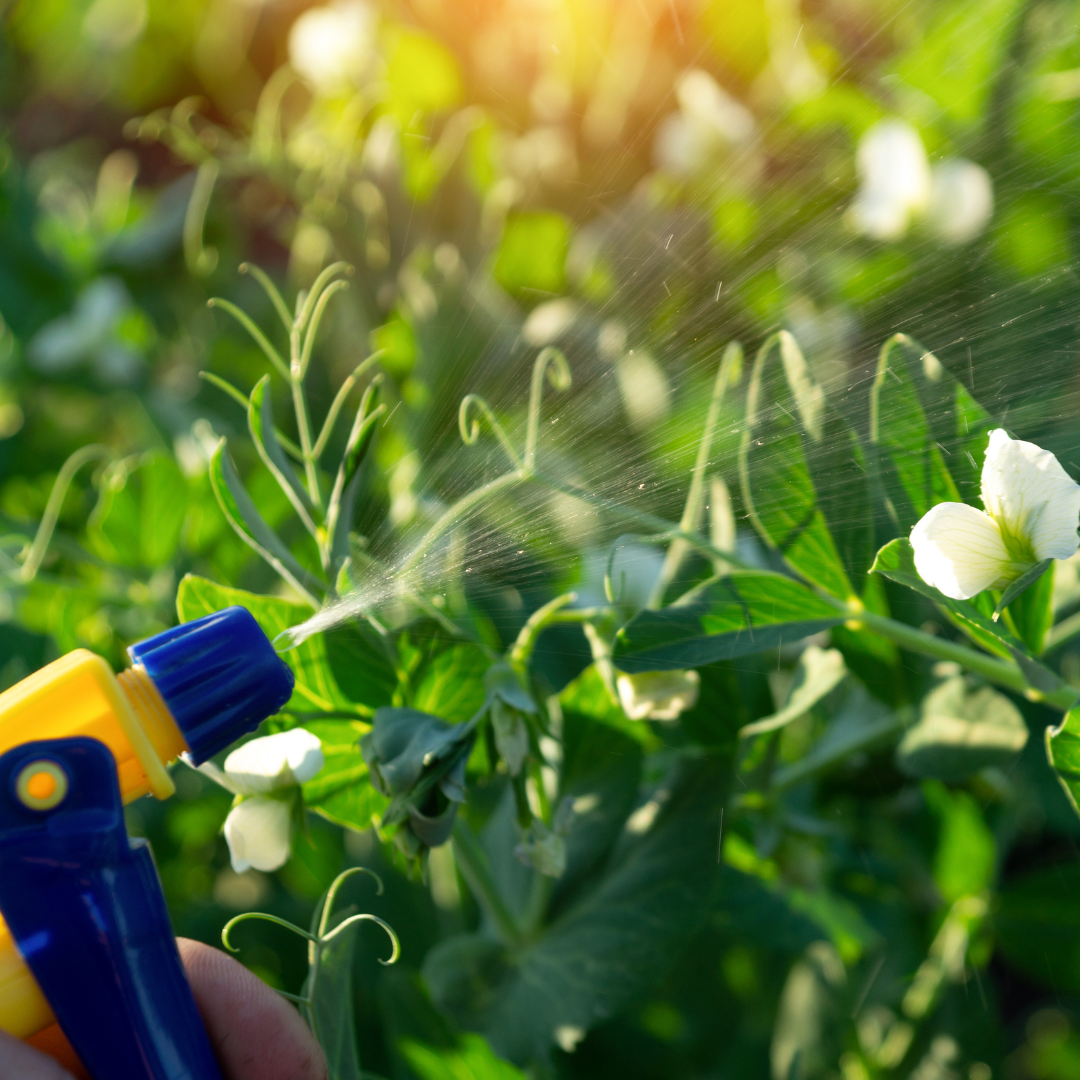
They also affect Spirea pretty heavily, which is another pretty common landscape plant. If you see the tip starting to curl, walk over to them, lift the leaf up, and if you see the little black bugs underneath, there’s no perfect rule, but those are generally going to be aphids. We use the three-in-one and box them right out. We do see it on perennials a lot of times, too, and it usually is on the newer growth. You start to see it kind of curled, so you kind of want to scout out that, too.
Besides making sure you’re protecting for different insects and things like that, but when we have our vegetable gardens or things like that, or even a flower garden, you have to weed pretty frequently. It’s a very big part of the maintenance, yes. In the flower garden, you can use a product called Preen. It’s a pre-emergent, so it kills seeds as they germinate. It doesn’t get the ones that come back from the root system but prevents any new seeds that may accidentally get put in there. This year, when I mulched my parents’ house, I used a product called Treflan, which is the active ingredient, and I put it down pretty heavily in the flower bed. There’s nothing else planted there, and if my mom forgets and runs the mower the wrong direction and blows the grass and the weeds up into that bed, any seeds that try to germinate, it’ll kill them. It’ll really cut down on my spraying and my maintenance later in the summer on those flower beds.
Fungus
Got an email from Kim in Perry Township who says, ‘can you tell me how to treat red thread fungus?’
Yes. It happens quite commonly in the yard when we have a very wet spring like this. I talked to my yard guy that works with the nursery here the other day, and he said he’s seen it in almost every yard. So, it’s an environmental thing. When the environment changes and we warm up and we dry out, that generally subsides. But to control it until it does, there is a granular or a liquid option for control.
Just stop into either one of the Rohr’s Nursery locations, and we can show you the products you need to control that in the yard, so it doesn’t take over. It looks like just like it sounds. It’s actually really tiny, it looks like red thread. It just looks like a weed more than a fungus. It’s actually in the grass. There’s another common fungus that we see sometimes when we’re like this. It’s called rust. When you walk through the yard, your shoes turn orange. Those are just environmental things.
When we have a wet spring like this, we’re noticing more funguses on the roses and certain other plants. We’re spraying to try to control what’s there and then preventatively spraying the new stock that’s coming in. The nurseries themselves that we buy from are also treating that product to try to prevent it from getting that issue when our weather allows it to happen. It’s not catastrophic, it’s not the end of the world. It’s just something you can treat and control. Once the environment changes and we get into our warm summer months, generally, it subsides. But, if we continue to stay really rainy and wet all the time, that’s what encourages it to grow. Well, I hope that helps you, Kim. Lots of good information there.
Questions? Email us at [email protected] or call one of our two locations: Portage (330-499-0101) or Everhard (330-492-1243).
