Norway Spruces, Arbs, and Watering Before Winter
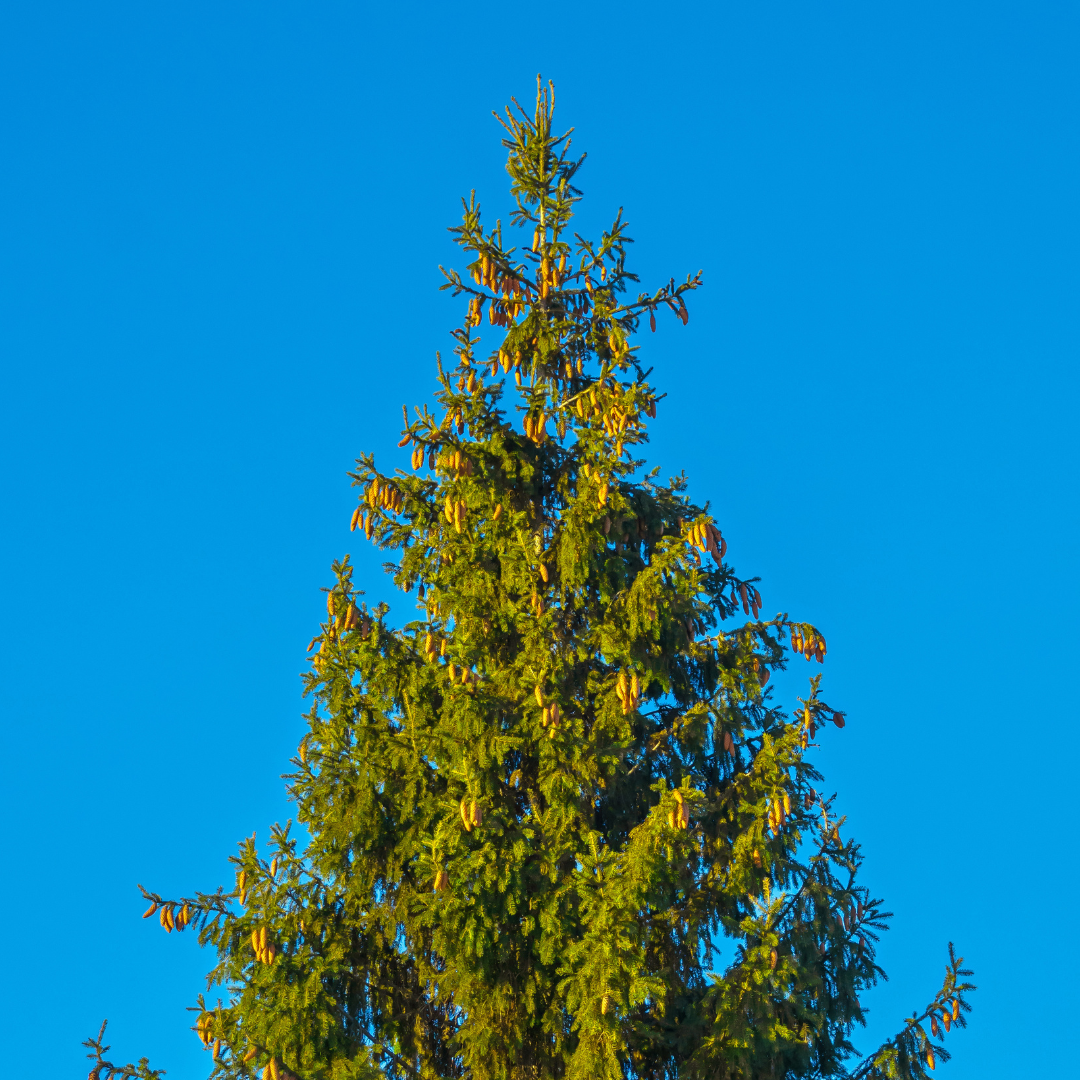
Norway spruce are one of the fastest growing of all the spruce varieties.
It will get about 50 foot tall, probably 20 foot wide. So it’s a large tree, but it can be used as screens. It’s very winter wind resistant. The deer generally don’t eat it. So it’s a really good option for low maintenance, large screen projects. And then the other one that’s going to be good for screens would be the green giant arborvitae.
Arborvitae is the fastest growing way to create a screen in your yard. It’s also deer resistant and winter wind resistant. They’re very hardy. Once you get them established, specifically the evergreen plants going into winter, we want to make sure the soil stays moist.
If those plants freeze the first year and their root systems dry, it can cause a lot of damage. We saw more of that this last season than we’ve ever seen before because we had a really dry fall.
When we get cooler, do not, even if we’re not getting rain, do not stop watering. That plant is still consuming moisture. We want to make sure we keep that moisture present in the soil around the roots until the ground freezes.
It depends on the size of the plant too. So if you’re talking about a little three footer, it’s got a little tiny root system. You’re going to have to probably water it more often.
If you’re talking about a big 10 footer, and there’s a ton of sizes in between, but if you’re talking about the two extremes, the large 10 footer, you’re going to have to water that one less often, but it’s going to take a lot longer to water that one because it’s going to take time to get the water down into the bottom of the root system.
If you just dump a five gallon bucket on it, you got the top two inches of the soil wet, but the roots are down two and a half feet. You really want to get a garden hose out there, let it trickle on all four sides of the tree, maybe 5, 10 minutes on each side, and then you don’t have to do it very often.
So if you deeply water, you can get away with them, you know, once or twice a week. If you’re shallow watering, you’re encouraging the roots to come to the surface too, which is not what we want. We want the roots to grow down deeper into the soil. So deep watering, you’re going to spend the same amount of time as shallow watering, but it’s going to be a much better effect for the tree.
Questions? Email us at [email protected] or call one of our two locations: Portage (330-499-0101) or Everhard (330-492-1243).
