Different Kinds of Hydrangeas and Trimming Recommendations
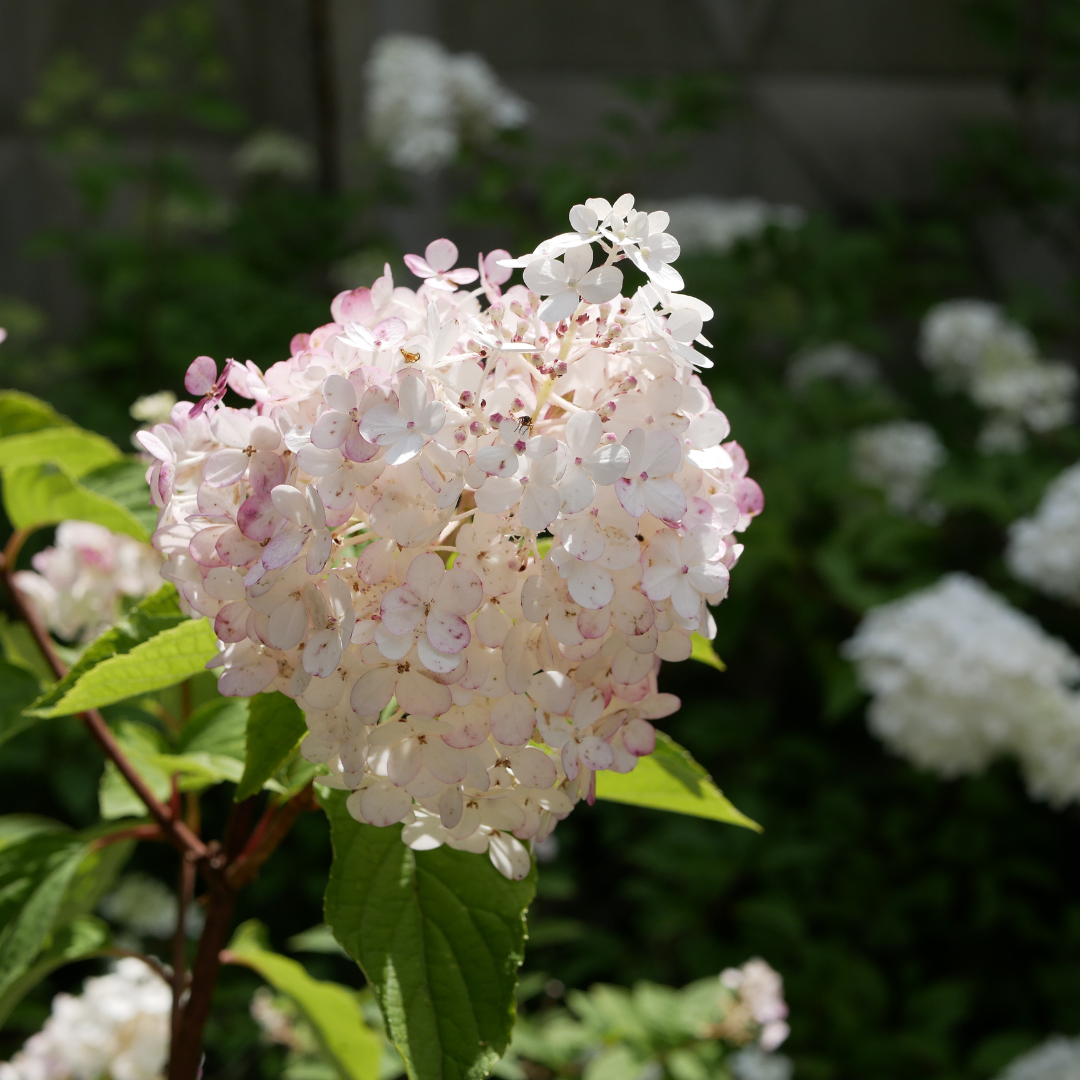
Annie in Jackson asks, “my question is, in 2023, at your nursery on Portage, I bought two hydrangeas. One is a Bobo and the other one is a Lil’ Quick Fire. One of your workers came and planted them and they doubled in size. And there’s so many flowers and they’re all brown now. And they’re all like hanging over, especially with this rain. Should I start cutting them back?”
Both those varieties of hydrangea are really, really forgiving of pruning. So definitely this is the time of year. If the color’s gone out of the flower, it’s not really doing anything aesthetically wise. So go ahead out there and trim all those old flower heads off. It’ll allow the plant to stand back up.
We don’t trim the canes real heavy this time of year, which the cane would be anything below that flower bud. Normally we wait till early spring if we’re going to trim the canes. You can do light pruning this time of year, but you never want to take the whole plant back by like 25 or 30 percent. That’s something we’ll do first thing in the spring before it leafs up.
Taking the old bloom heads off this time of year, 100 percent fine. Actually recommended. The canes will usually stand back up on their own within a day.
I’ve got to do that too because I do have some that are dried out. That is kind of a fun thing too, they make a really good dried flower. I like to use them in arrangements, and you can even spray paint them sometimes too if you have a project that you would want to use dried flowers for.
Flower Heads
This is something else to think about. In the paniculata family, which is the one she was talking about, they’re a cone-shaped flower. There are a lot of varieties that the flower head’s not as dense. I have one called lava lamp flare planted off my deck. And it’s three feet tall, three feet wide, which is the max growth on that plant. And not one bloom has flopped over. Because of the design of the flower, it’s a little bit more open and airy of a look so it doesn’t trap the moisture like the really dense flower heads do.
So if that’s something you’re thinking about planting, we can lean to one of those varieties that naturally has a more open flower head. Another one is called pinky winky. It’s got a little bit more of an open flower head. It’s not like the limelight that’s really dense and heavy and has a tendency when it gets wet to flop over. Those other varieties that have the more delicate looking flower heads, more open, more airy flower heads, will stand up through rain and not be an issue.
There’s a lot of variety and a lot of choices. And some people come in sometimes and they’ll ask for a specific one and they’re disappointed, because we don’t have that variety. We can always order it in for you, we do special orders all the time. But there’s like 500 species, there’s no way that we can carry all of them. We watch how they grow, how they perform in the nursery, how they do on our job sites, and we try to narrow it down to the best in each category and for this part of the country, too.
Past Hydrangea
That’s the case with a lot of plants, too. But we have seen over the years, you hear of names like Nikko Blue used to be one. But they have just hybridized them and made them better bloomers. So the older names and stuff, sometimes you don’t hear them that much. And it’s because there’s a better version.
Like Nikko Blue only bloomed on old wood. So if we had a bad winter and the canes died to the ground, you’d have no flowers that year, no matter what you did. Now Endless Summer, University of Georgia, I believe, is the one that came up with that one. It may have been an offshoot of a hydrangea like Nikko Blue, but they found that it will bloom on new wood and old wood. So even if it dies to the ground, that plant has the potential to produce flowers every year.
And so that’s why Nikko kind of fell out of favor. It’s just because I’m guaranteed a chance at flowers with this other variety. Where I know I’m not getting flowers with this old-fashioned variety after a hard winter. So that’s why some of these older varieties have been phased out of production.
Questions? Email us at [email protected] or call one of our two locations: Portage (330-499-0101) or Everhard (330-492-1243).
