
What’s the Process Behind Tree Stocking?
I had my first supplier call, and he asked, ‘Are you still looking for your first load at the end of February?’ Yeah, as long as we’re not shoveling snow. This would be perfect weather to unload trucks and stuff like that.
Get the trees here, get them in the ground while they’re still dormant, and then they wake up naturally here. The last thing we want to do is be bringing stuff in that’s got leaves on it already. It just stresses it too much. So that’s why we’ll bring in about 30 to 40 semi loads in the month of March to get it in here while it’s still truly dormant and then it wakes up naturally here.
To get some here in February, it just eases the burden on March. We’ll just wait and see what the weather does. I work with these guys, we’ll call and text on a weekly basis as we get to the end of the month there and end of February, and if it looks like the weather’s gonna hold, in about a week to ten days we see the product here. So there’s always a little bit of a little bit of gamble.
There have been a few times we’ve unloaded trucks and set them in the parking lot for a day until that snow melted and we could get back into the beds, but we’ve been very lucky the last few years. We’ve had fairly early springs.
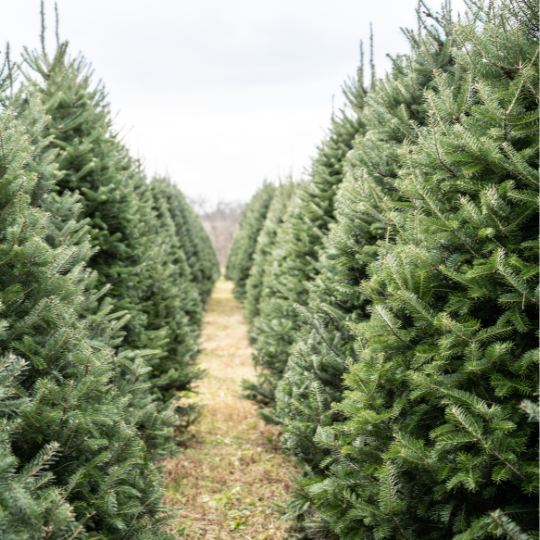
The first load is gonna be coming from the supplier I was talking to. It’s all big evergreens. Big Norway spruce trees from 5 to 6, 6 to 7, 7 to 8, 8 to 10 feet. And then green giants, 8 to 10, 10 to 12, 12 to 14 foot green giants. Big screen trees. They take up a lot of room and they take a little bit more time to put away than a deciduous tree, because when you cut them open they’re all tied up in this tight little cone and when you cut all those strings loose, that thing’s four times as wide.
So we’ll unload the truck, we’ll stage everything, and then Dave and Garrett and I will start to work through the varieties that are there. When we unload, we try to keep them organized by size, and then we can get counts on everything. As we put them away, we’ll cut the first one or two open so we can make sure spacing is good. It’s important when we put these trees away to have light and air movement all the way around the tree.
If we open up two trees and when we cut them open they spring together and they’re touching, wherever they’re touching they’re gonna burn if they sit there for any extended period of time. Some of these trees that we’re bringing in, we’re planning on having until August or September. We’re bringing in a stock that we know we may sit on for a while, so we’ve got to make sure there’s enough room around them. Nothing worse than putting them away and then cutting them open and realizing, ‘oh my gosh, they’re all touching.’
They’re heavy, some of these big trees, especially like the eight to ten footer you’re talking about, five, six, seven hundred pound trees, something you don’t want to have to move those around more than once. You want to get it right, right off the get-go.
This grower that we deal with, he’s a small mom-and-pops grower right on the West Virginia/Virginia border. There aren’t enough local growers producing evergreens, so it’s one of the things that we have to go out of state for. Again, we try to buy as much as we can from the Lake County area and we do bring in some from up there, but this helps supplement it.
This guy, I’ve been down to his property. It’s absolutely beautiful down there, and just a lot of personal pride in each tree that he produces. I wish he could produce more. I think we buy four or five semi loads over the course of the year between the two locations. Every one of his trees are perfectly cookie-cutter. I mean it takes about seven to ten years to produce one of those big evergreen trees, so investment and a lot of blood, sweat, and tears went into producing them.
Questions? Email us at [email protected] or call one of our two locations: Portage (330-499-0101) or Everhard (330-492-1243).
