Answering Questions About Redbuds, Junipers, & Azaleas
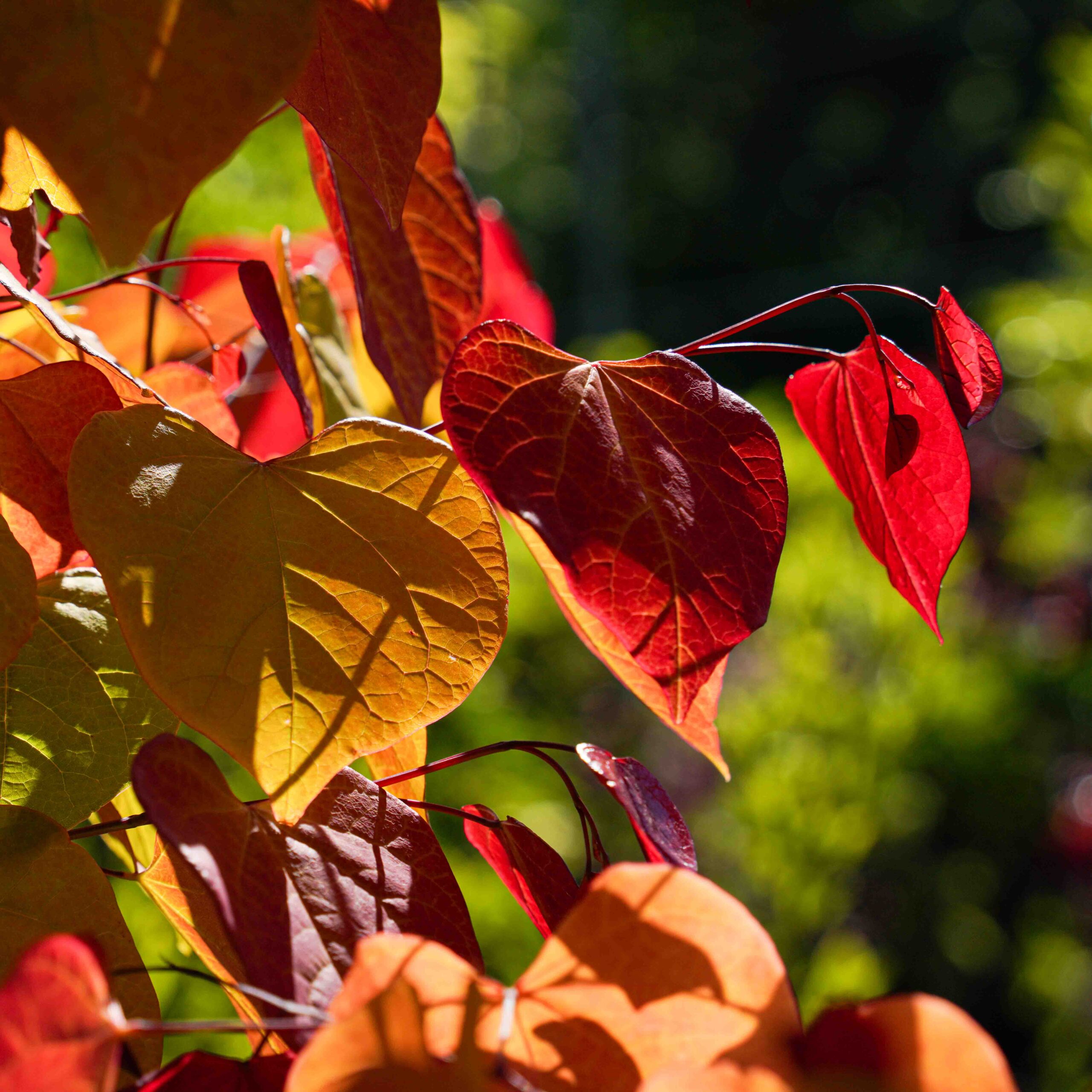
We have Donna in Massillon with a couple questions here: ‘I have a question about my redbud tree. It’s a beautiful tree, but it changes leaves many times, and I’ve had people ask me if it’s dying, because right now it looks like fall. The leaves are kind of brown and yellow, and it does look like a fall tree.’
We would like to see a picture of it to get a better idea. Bring it in, and let us take a little bit of a closer look at those leaves. Take a picture of the tree from a distance, and then take a picture of the leaves up close, where they’re going from green to yellow or brown, and we’ll see what’s going on there.
My guess is that it got so we had a really cool, wet spring, a very long, very wet, cool spring, and what we’ve seen this year with birch trees, even some maple trees, the leaves grew bigger than what the tree can now support that we’ve got hot, and so the tree will naturally select certain leaves to drop. Now, if it’s affecting the tree as a whole, and it’s just not, say, like the inside leaves, then there’s something else going on, and that’s why those pictures will help us help you.
‘And I also have a question about my garden junipers. I have red brick down, and the junipers are kind of growing, covering all of them. And I’d like the red brick to be showing. Can I trim that back?’
So a Japanese garden juniper, or juniperus procumbens, the Latin name on that, that plant loves to be pruned and fertilized. It’s going to handle it really well. I wouldn’t maybe trim it right now since we’re in the 80s, but next week we’re supposed to drop back into the 70s. This is something also that you want to consider. After that plant has grown for years and years and years, you don’t want to take two or three years of growth off in one pruning session.
What I’d rather see you do is selectively reduce it and take it back over a period of time, never taking more than 10 to 15 percent of the plant off in the pruning process, and then you’ll be fine.
‘And I also have an azalea tree. So far there are no buds at all on it. It didn’t bloom, it’s just loaded with leaves. Why didn’t it bloom?’
So what happens a lot of times with azaleas, rhododendrons, their buds are set going into winter. Like they’ll set their buds in the summer and fall for next spring. If we have a really windy, cold winter, like we just had a real Ohio winter, a lot of times those buds will dehydrate.
And so there’s a spray you can put on azaleas and rhododendrons, like after Thanksgiving but before Christmas. You can spray this leaf sealant, for lack of a better analogy. It’s like a watered-down Elmer’s glue or a liquid chapstick. You spray it on the plant and it seals the flower bud and it seals the leaves. And what that does is it protects it from dehydrating in the wintertime because if those buds freeze and dry out in the winter time, you’ll have no blooms.
So that may be what happened. I would encourage fertilizing it with all-season fertilizer. That’ll help give it the ingredients it needs to set good buds this summer and then this fall, like I said, after Thanksgiving but before Christmas, you want to spray that wilt-proof product on there. And we’ll talk about it that time of year on the radio show. That will really help that plant do significantly better through the winter.
Questions? Email us at [email protected] or call one of our two locations: Portage (330-499-0101) or Everhard (330-492-1243).