Answering Questions About Trimming Japanese Maples & Lilacs
Let’s go a question from Joe in North Canton. He says ‘Hi, this week, I cleaned out my flower beds, daylilies and what have ya. I was looking at my miniature lilac bush. And I wasn’t too sure if I should chomp on that thing right now or wait until after. Same with my Japanese maple. I couldn’t do it this summer. I had some medical issues and I couldn’t get out there like I wanted to.
My recommendation with the lilac is to just be patient. I would trim that in the spring, right when it’s done blooming. So you wanna wait probably until, those usually are gonna bloom in May sometime, late April, early May, depending on Ohio. I mean, we can vary our weather here quite a bit. But as soon as it’s done flowering, that’s when you wanna go give it a good haircut. Also, when you give it that haircut, that’s also when you wanna fertilize it with a good granular slow release. Don’t fertilize it this time of year. You wanna wait in the spring to do it right after a haircut.
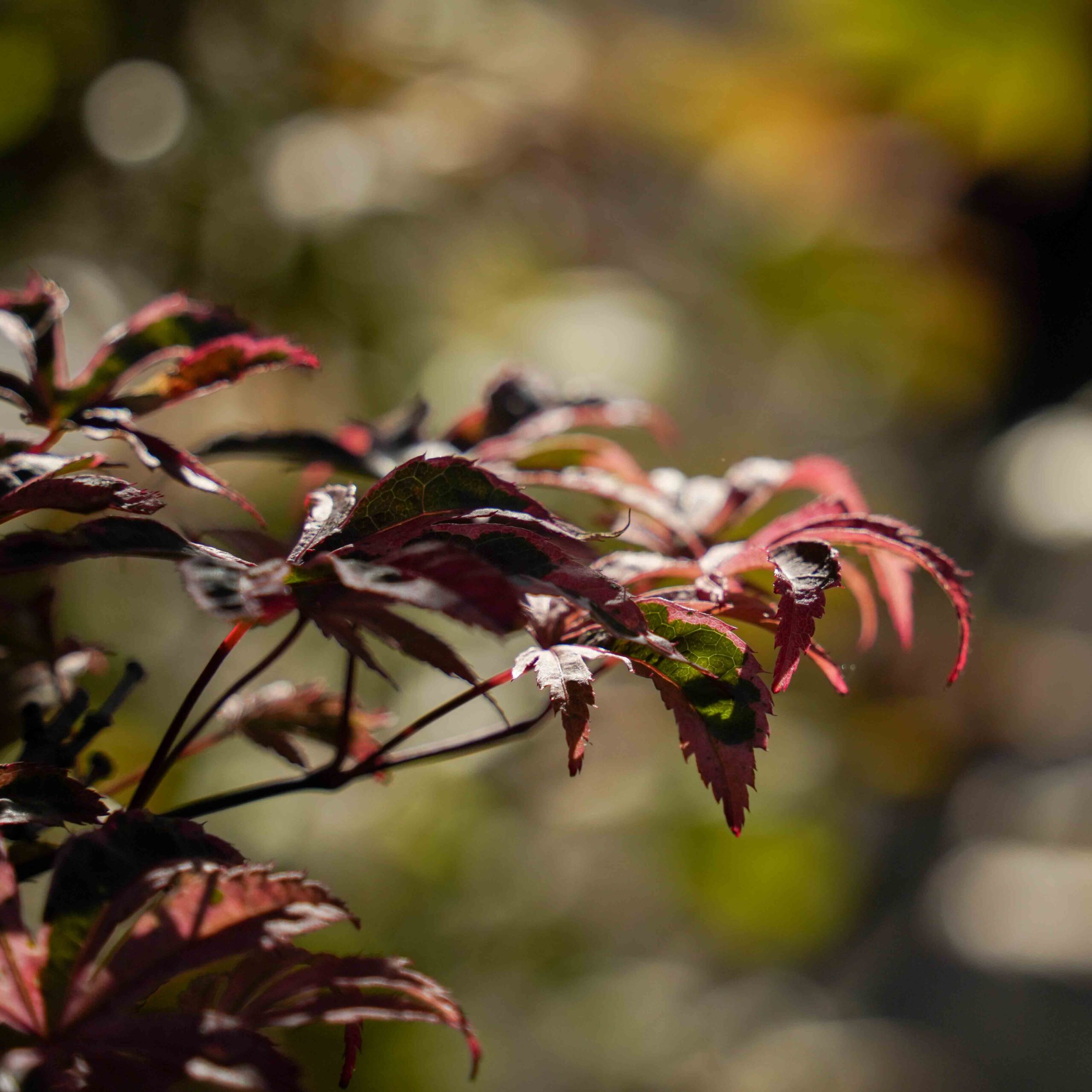
The Japanese maple, you can trim a little bit in the fall. There’s not really a flower bud. We’re gonna be cutting off with that by doing a fall trimming. And light trimming in the fall is always fine. Like if you got one wild branch that kinda comes over a walkway and you wanna trim that back, that’s not a problem. If you’re gonna do any major shaping on the plant where you’re gonna take 10% or more of the plant off, then you do wanna wait till early spring to do that. I would recommend that probably early April.
Japanese maples present some unique issues, don’t they? There’s a lot of different varieties when someone comes in and says, hey, I have a Japanese maple. There’s weeping varieties and there’s upright varieties. And then there’s some really super dwarf varieties that naturally are only gonna get five, six, seven feet tall. So it really depends on a recommendation there. Trimming’s gonna be about the same time of year, but how we trim and how aggressive we get will depend a little bit on the varieties that we’re dealing with. So we’ll ask those questions. And if they’re not sure, that’s where a picture’s worth 10,000 words.
Usually the trimming is the easiest in the spring before they leaf out. As there’s really right before they break dormancy, because you can kinda see where you’re going. You can see all the stem structure that time of year before the leaves are in the way. So it’ll actually help you trim it well. The first thing when we’re doing trimming in the spring is we always take deadwood off. Deadwood has to come out first. But you can do that now too. hat can happen any time.
And then the second thing that we take out is what we call crossing branches, where if you have a branch growing out the left side of the tree and one of its branches comes off and grows back through the center of the tree, we want the tree to develop from the center out and have no branches crossing back through the middle. And then we step back after those two things are accomplished. We look at the tree and then we’re gonna go ahead and do the trimming for the shape that we’re after.
They’re pretty problem-free, but they can have a few things. I’ve seen bugs occasionally on them. When that happens, you can spray, but you have to spray at the right time. If you spray in the middle of the day, it will torch the leaves. And that’s true for anything.
Yeah, and that’s always our recommendation is wait till late in the evening. The wind dies down. You’re not gonna get drift onto things you don’t want it on. And when you spray, the plant’s pores are opening at night to drink in the dew, and you’re gonna take that concentrated chemical in. If you spray in the middle of the day, one, the chemical can burn the leaf, and two, the pores of the plant are closed, so it doesn’t absorb in as well in the middle of the day as it will in the evening or early morning.
Questions? Email us at [email protected] or call one of our two locations: Portage (330-499-0101) or Everhard (330-492-1243).