
Checking on Your Pond Aerators This Winter
For everybody that’s got a pond, keep an eye on it this time of year. It’s easy to put it to bed for winter, cover it with a net, put your heater, your aerator in, and walk away. Peek at it every once in a while. Make sure the aerator is still functioning. Make sure the heater is still working. These are just things that are out of sight, out of mind. You’re not really out there. You just kind of forget about it until spring. Poke your head outside once in a while and just check it and make sure that it’s still good.
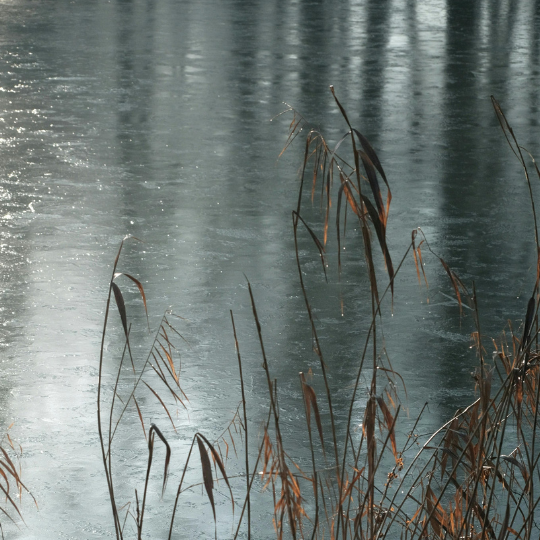
Normally an aerator will keep an opening in the ice, it pumps air down to a stone. That stone brings bubbles to the surface. As the bubbles burst, it will freeze a dome. But when we hit single digits, as those bubbles burst, they atomize the ice in the air, and they actually freeze a dome where those bubbles are coming to the surface and bursting. That does not hurt anything as long as the aerator is running underneath.
The danger of a pond freezing over, and not so much with lakes. This is more for small volume bodies of water like our ponds in our backyard because we have way more fish in there than what you would find per square foot in a lake. We don’t want any of that debris that’s rotting in the water, the leaves that might have snuck through the net or any fish waste that was in the water. As it breaks down, it creates a methane gas. We want that methane gas to be able to escape. Otherwise, it will consume the oxygen and suffocate the fish.
Running the aerator underneath there, I have people, when we hit single digits, they’ll call the nursery and say, ‘Oh my gosh, my opening in the water is gone.’ It’s okay. The aerator is running underneath that, continuously putting oxygen back in, and it’s actually keeping the pond warmer by freezing over. Because as that water comes to the surface, it’s exposed to 32-degree ice, not negative 10- degree air or 3-degree air. So you’re actually keeping the pond warmer with the freeze over that happens. Some people do have a heater at the very surface above the aerator, and that will keep the opening in the water.
But we’re kind of right on the cusp here. If you go any further north, up into Michigan, they recommend both. The veterinarians, they do heat and do aeration. Where we’re at here, generally the aerator seems to be enough.
You hate it, but you can’t feed them. Most of the time when we get cold like this, they’re kind of sitting on the very bottom, fins clamped against their side, not really moving around too much. They’re in a dormant state. That’s where it’s warm. Mother Nature is trying to keep that water 50 degrees down there, so they’re just kind of going down to the bottom. That’s why it’s important not to put the air stone on the bottom of the pond.
You want to put that air stone maybe only a foot down in the water column. And that will prevent you from super cooling the pond. Remember, the bottom of the pond, we’re trying to keep it, let Mother Nature keep it 50 degrees, which is what she’s naturally trying to do. We don’t want to pump three degree air down there, because now we’re super cooling that pond down. And until the year 2010, we’d never really had a recommendation where to put the air stone. We’re like, oh, just throw it in.
Well, that year we had the coldest winter in Ohio’s recent history. 2010 was nasty. I think in February, we were below zero for like 15 days straight. Oh, my gosh. And when that happened, we realized through, as things thawed out in the spring, we were contacting customers, contacting us. And through asking people questions, we figured out that the stones that were on the bottom of the pond super cooled the ponds. The stones that were only partway down the side of the pond let that bottom temperature maintain, and those fish wintered much better.
Questions? Email us at [email protected] or call one of our two locations: Portage (330-499-0101) or Everhard (330-492-1243).