
Dealing with Spotted Lanternfly This Year (2026)
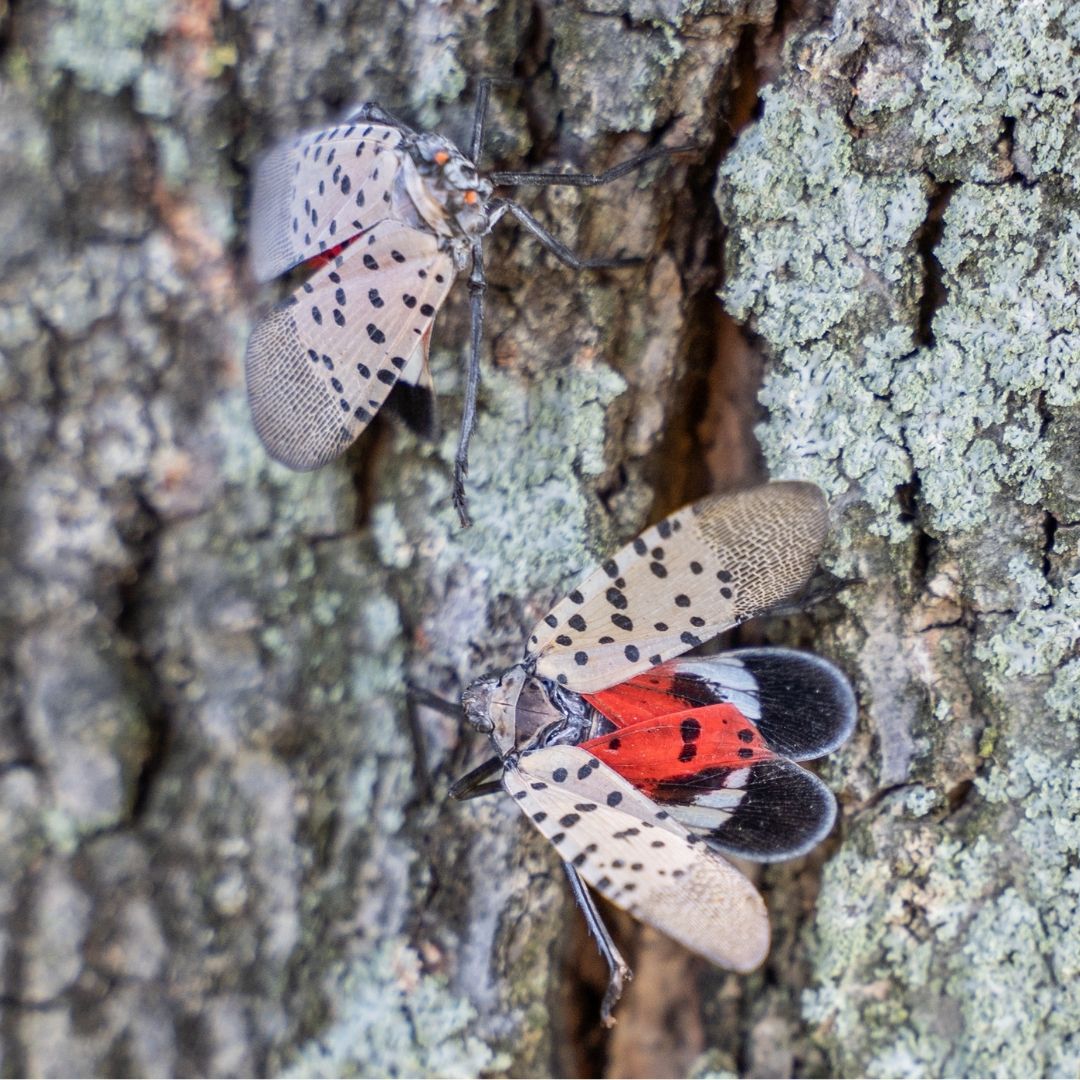
The spotted lanternfly wants to come and visit us this spring. I’ve heard some reports already on it. They’ve spread the quarantine to the whole state. What does that mean for us?
We pre-treat all our stuff at the nursery. We have a spraying regiment where we’re using different things to control the broad spectrum. The nice thing about the spotted lanternfly, if there is a good thing, is that it’s fairly easy to control. Not a very difficult insect to get rid of.
Normally we don’t recommend pre-treating shrubs, but there are certain shrubs that we do like azaleas and rhododendron and pieris japonica. Those are evergreens and once their leaves get damaged, it just doesn’t ever look the same.
So there’s a granular you can put down in the early spring. It’s called Tree and Shrub Protect, and it’s a 6 to 12 month slow release, so it lasts for the entire season. You only have to do it once a year, where the liquids you have to apply every 10 to 14 days, and then you have to be careful when we get hot in the summer. Because you don’t want to spray it on the leaves when it’s too warm.
It’s faster acting in the liquid form, but the granular, once we get into I’d say probably mid-April, end of April, you can put that product down and it just protects it for the whole year. You don’t have to worry about anything happening to those shrubs. A lot of times when you notice it it’s because there was damage, so it’s too late for that to be fully protected.
From what the growers have said, all the growers that I’ve gone out to and done the tagging at and stuff, they have spraying programs for it. And there are certain sprays you use at certain times in the year. You can use dormant oils at certain times, and then the systemic insecticides at other times.
We saw a little bit of damage on autumn blaze maple last year. It’s one of the ones they seem to prefer. It’s a red and silver maple cross. It’s the fastest growing maple that we sell, so we do keep an eye on that. And like I said, at the nursery, that stuff is treated before it ever would go out to a customer’s house. So it should be protected as far as homeowners go.
Prevention is always a good thing. Ailanthus, or tree of heaven, is one of their host plants. And it is kind of a weedy tree. So if you have areas where you know, things just kind of grow up and stuff, you kind of want to look and see if you have that, and get rid of it if you can. You can look up the tree of heaven and see what it looks like, because it’s a unique look. And it grows very fast.
Questions? Email us at [email protected] or call one of our two locations: Portage (330-499-0101) or Everhard (330-492-1243).