Native Ohio Pond Plants
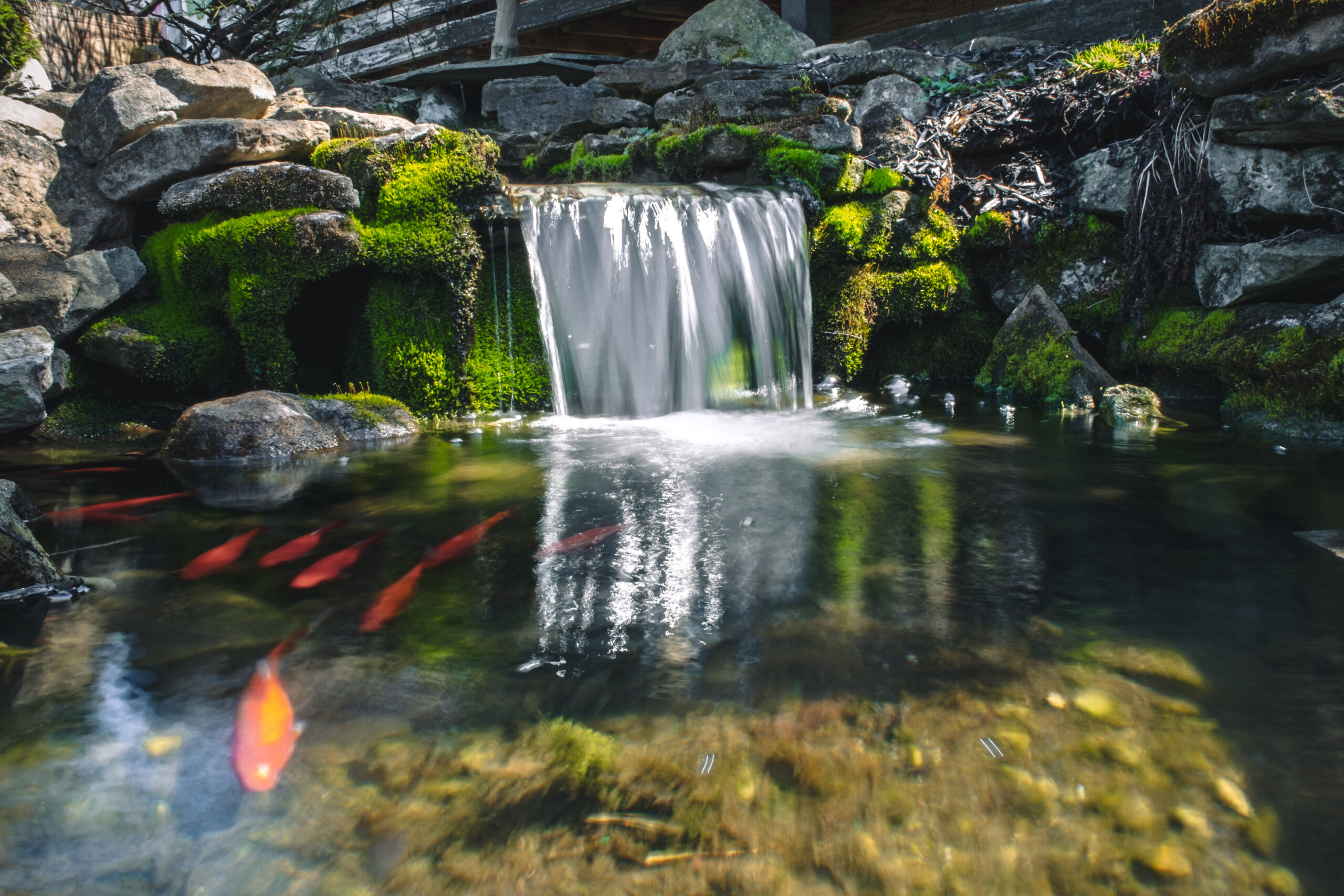
We get asked every so often about plants that are native to Ohio, but we haven’t touched on native pond plants before. If you’re building your own pond, what plants are you supposed to include to create the best environment for your fish?
We’ll give a general overview of submergent and floating aquatic plants in Ohio, but keep in mind that comparatively to other states, Ohio’s aquatic plant diversity is lower.
Included below is the Common Wetlands of Ohio field guide from the Ohio Department of Natural Resources for an expanded resource for marginal plants, as well as an aquatic plant ID guide from the New York State Department of Environmental Conservation.
Spatterdock / Nuphar advena
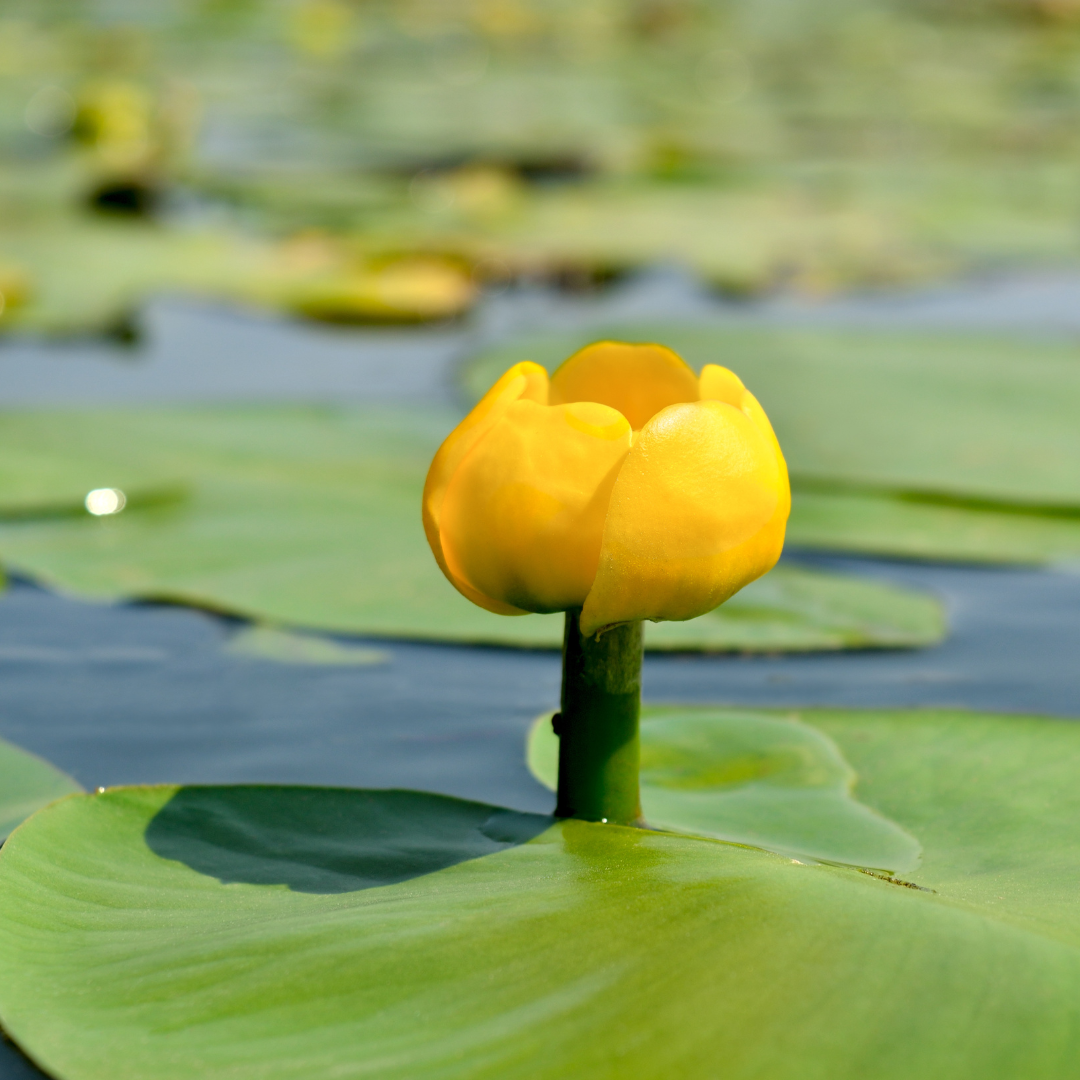
The Spatterdock, or Cow Lily, is a perennial that has a very large native range, being found in North America, Europe, Africa, and Asia. It tolerates all types of water, even thriving in acidic conditions.
The plant grows best in full sun with softer sediments at the bottom of the pond, and it blooms from May to October. It can spread fairly quickly if exposed to an abundance of external nutrients, like fertilizer runoff from lawns.
It acts as a food source for just about everything that lives around a pond, like beavers, turtles, insects, birds and more.
White Water Lily / Nymphaea odorata
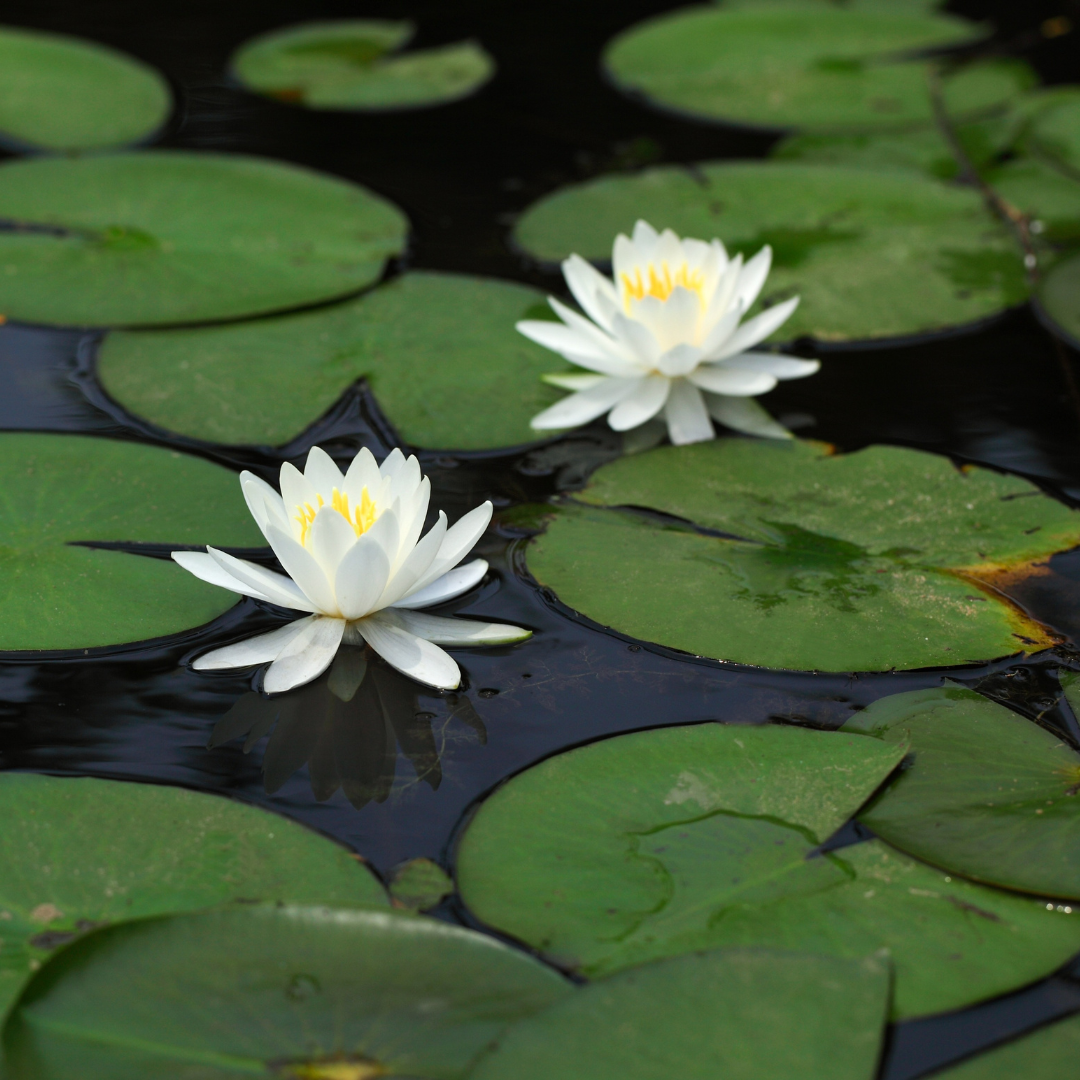
The White Water Lily is a common pond plant found around the majority of the USA and Canada, but native to eastern North America.
They grow along the edges of stiller ponds and lakes and extend out to water 5-6 feet deep. The plant is often used ornamentally, with the fragrant flowers growing up to 5 inches wide.
These Water Lillies have a fascinating pollinating system, with a four-day cycle of blooming and pollen production. On the fourth day, after being pollenated, the flowers are pulled underwater for the seeds to mature. The leaves of the plant are a nice snack for turtles, and a safe resting place for dragonflies.
Water Shield /Brasenia schreberi
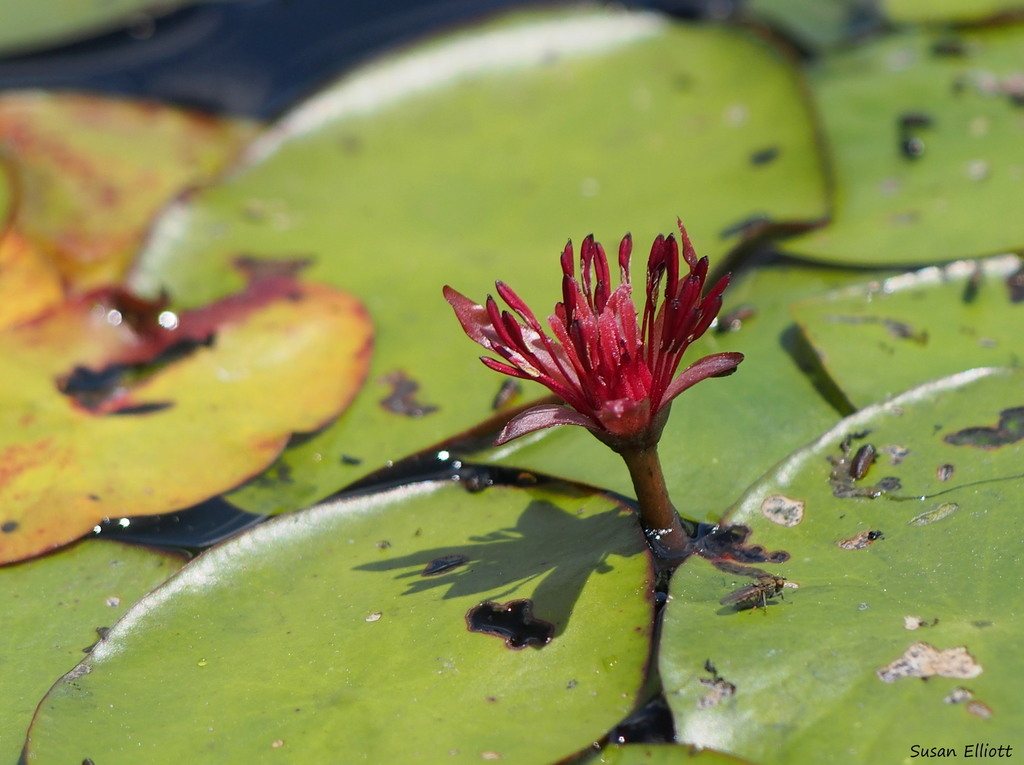
At first, the plant may look like water lilies, but the underside of the leaves (and everything else underwater) is covered in a slimy jelly or mucus-like substance. The plant is also found across the world, taking a liking to slow moving water or still ponds and lakes.
The flowers are smaller and less noticeable than the Cow Lily or the White Water Lily. The red-purple flowers are mainly wind pollenated, and only bloom for two days. At night, the stalk bends and the flower is dunked underwater, and emerges the next day ready for cross pollination.
The plants can inhibit competition from algae and other bacteria by secreting different chemicals in the water, which makes it great for keeping water clean, but it can take over fairly easily.
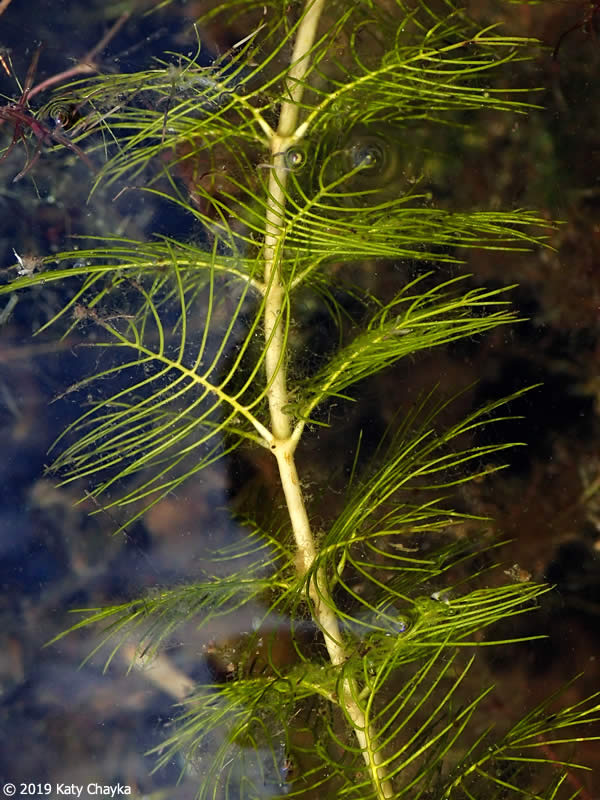
Northern Water-milfoil / Myriophyllum sibiricum
Northern Water-milfoil is extremely rare in Ohio, but it is native to North America. It has been mostly overtaken by the Eurasian variety, which is invasive to the point of choking out every other aquatic plant in the habitat.
While they look incredibly similar, the surefire way to tell the species apart is by picking them up. The Eurasian Water-milfoil will go limp and collapse against the stem when pulled out of the water, while the Northern variety will stay stiff and ridged.
These plants are found in ponds, slow rivers and lakes, in shallow water. It enhances the water quality and produces oxygen, helping wildlife thrive.
Myriophyllum sibiricum (Northern Water-milfoil): Minnesota Wildflowers
Lost and found: native aquatic plant in Ohio | Great Lakes Now
American Lotus / Nelumbo lutea
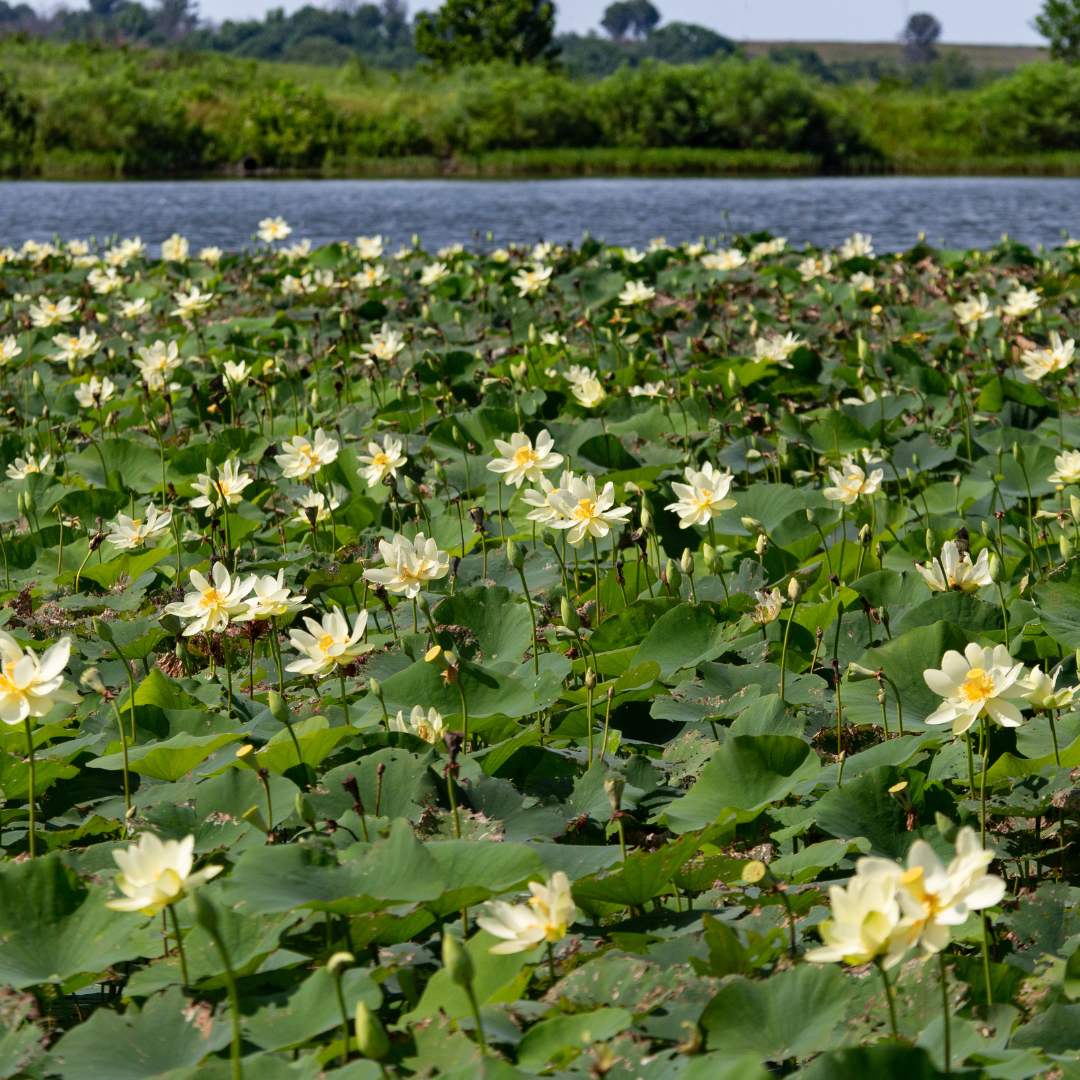
The American Lotus is much like the other water lilies and floating plants; they do have the capacity to aggressively take over shallow waters.
The yellow flowers can grow up to 10″ across, and the leaves can grow up to 3′. These picturesque plants are also edible, known as a historically significant food source for Native Americans.
https://bygl.osu.edu/node/1089
https://eattheplanet.org/american-lotus-fun-to-forage-and-highly-nutritious/
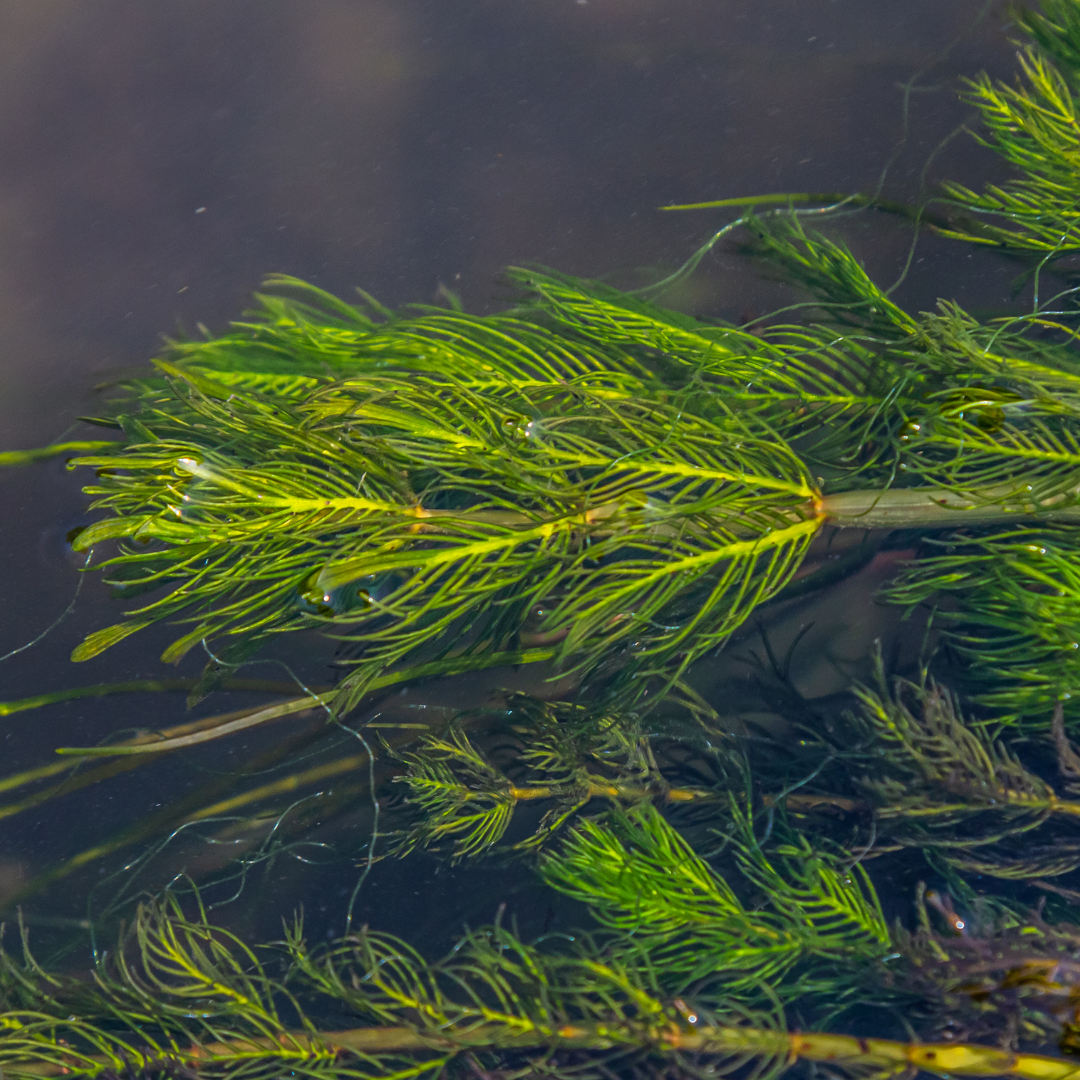
Hornwort / Ceratophyllum demersum
Hornwort is a feathery plant with stems that can grow several feet long. The plant has no true roots, instead attaching to the bottom of aquatic bodies with tiny filaments called rhizoids.
It can spread fairly quickly, but it is an important food source, habitat and oxygenator that keeps algae at bay.
Field Guide
Identification Guide
Let us know if you found this helpful. Rohr’s is here to answer any questions you may have, and we also test pond water for free!
If you’re interested in having Rohr’s build you your own native plant paradise, email us at [email protected], fill out a quote form, or call one of our two locations: Portage (330-499-0101) or Everhard (330-492-1243).
