Popular Plants, New Redbuds, & Shrubs at Rohr’s!
I wanted to talk a little bit about lava lamp flare hydrangea, and maybe the Hearts of Fire redbud and some of the newer varieties of hydrangeas, redbuds and shrubs.
Talking about popular plants, we’ve mentioned the paniculata hydrangeas and plenty of options there. Flare is, in my opinion, one of the best. Just a great medium-sized three to four foot, great red color that it matures into, just a real beautiful variety. So definitely one to consider, and same on the redbuds. The breeders have really been going hard on redbuds the past few years, putting out some really, really cool new varieties.
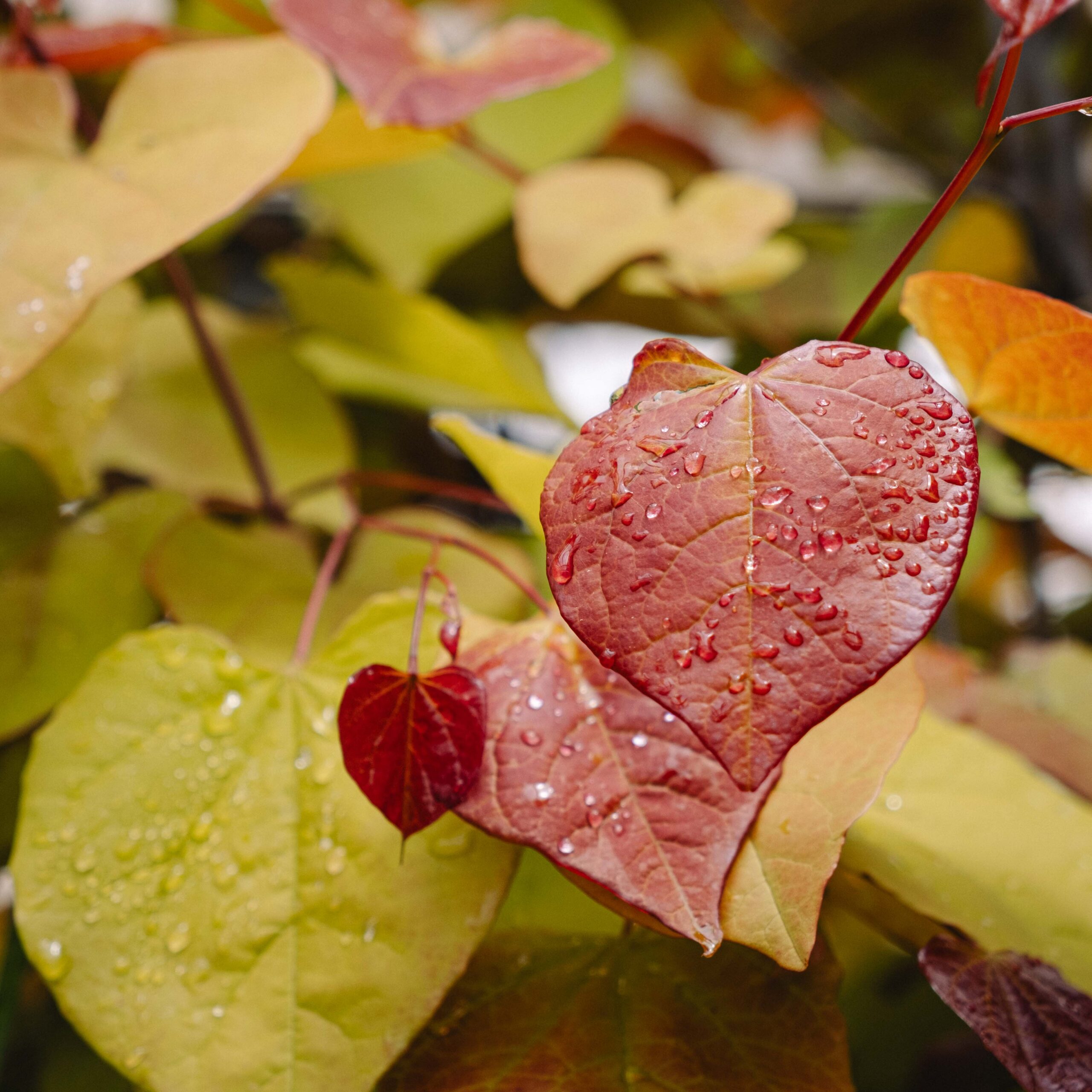
Flamethrower was kind of the first one that took the industry by storm, and I feel that Hearts of Fire is absolutely an improvement on that. We were talking about how it has more of a red color, almost a thicker leaf that it holds up through the heat of summer and really holds that color. It’s just such a beautiful tree.
There’s a couple other new ones coming out that we’re gonna have. The rise and shine is another redbud. It’s kind of got this orangish apricot new growth that hardens off to like a chartreuse green, but the most impressive part of that plant is the second growth that happens in the middle of summer. You get this apricot flush on the outside of this lime green core of the plant.
It’s really cool, and all these redbuds we’re talking about that have incredible foliage color also have the beautiful redbud flowers in the spring. Most redbuds up until about 10 years ago had either a purple leaf or a green leaf, and those were your options, but now there’s so many other options with new growth color that changes mid-season. Then you get the blooms in the spring, and you get the first push of new growth, and then the second push of new growth, and then you get the fall color, so it’s just really turned it into an all-season color plant.
We’re starting to see some more of that breeding going into even the weeping varieties, where in the past it was just a green or that purple leaf. Ruby Falls is a new one and absolutely stunning, but they’re also doing some variegation, some different color tones in the weeping redbuds as well.
And there’s another one, it’s a variegated green and white foliage, it’s called Alley Cat, and that was discovered in an alley in Louisville, Kentucky. Somebody walked by it, it was growing in a crack in the concrete, he looked at it, knew the heart-shaped leaf was a redbud tree, and said, oh, I’ve never seen anything like that. Dug it up, took it to a plant breeder buddy of his that grew it on.
Mother Nature created this one. This wasn’t done by man, this is just a natural occurrence, and Alley Cat, because of where it was growing, does not scorch very much. One of the problems with variegated plants is that in the middle of summer, the white part of the plant generally turns brown, because the sun is just too intense. Alley Cat is highly, highly resistant to that, and it wasn’t a plant breeder that created it, it was Mother Nature. That’s like the perfect place, the perfect time, like luckily a plant person stumbled upon that.
Boxwoods
There’s a lot of new varieties coming out this spring. We have a really dwarf burning bush, it’s been around for a few years, called Little Moses. Some new spirea are coming out, Ice Dragon’s been a really popular one, and the new gen boxwood, the disease-resistant version of boxwood. If you’re gonna do boxwood, that’s the only one I would plant.
Those actually were brought to market out of Virginia. Saunders Brothers is a huge boxwood breeder that brings most of the varieties, I would say, or has a part in it. But these were bred to the market to be boxwood blight resistant, which is a very big concern, but maybe not as prevalent as leaf miner resistance, which was why they were initially introduced. So not something to overlook. They’re very, very resilient plants, and just a tougher plant than your other boxwood varieties.
All this new material that comes out is always patented for a certain number of years. You have to pay these fees to grow it and produce it, which makes the plant more expensive. However, in the growing process, the growers discovered they spray it so much less than the other varieties of boxwood, that even though it costs more for the initial plant to start growing. They’re able to produce it for about the same money, because they didn’t have to put all the rounds of spraying into it.
There’s a copper spray program specifically for one variety, green velvet boxwood, that’s a hundred thousand dollar cost every year that they do not have to do on the new-gen varieties. A hundred thousand just for a chemical to spray on one variety. That’s a huge operation for sure.
Questions? Email us at [email protected] or call one of our two locations: Portage (330-499-0101) or Everhard (330-492-1243).