
Problem Solving Common Pond Issues With Rohr’s
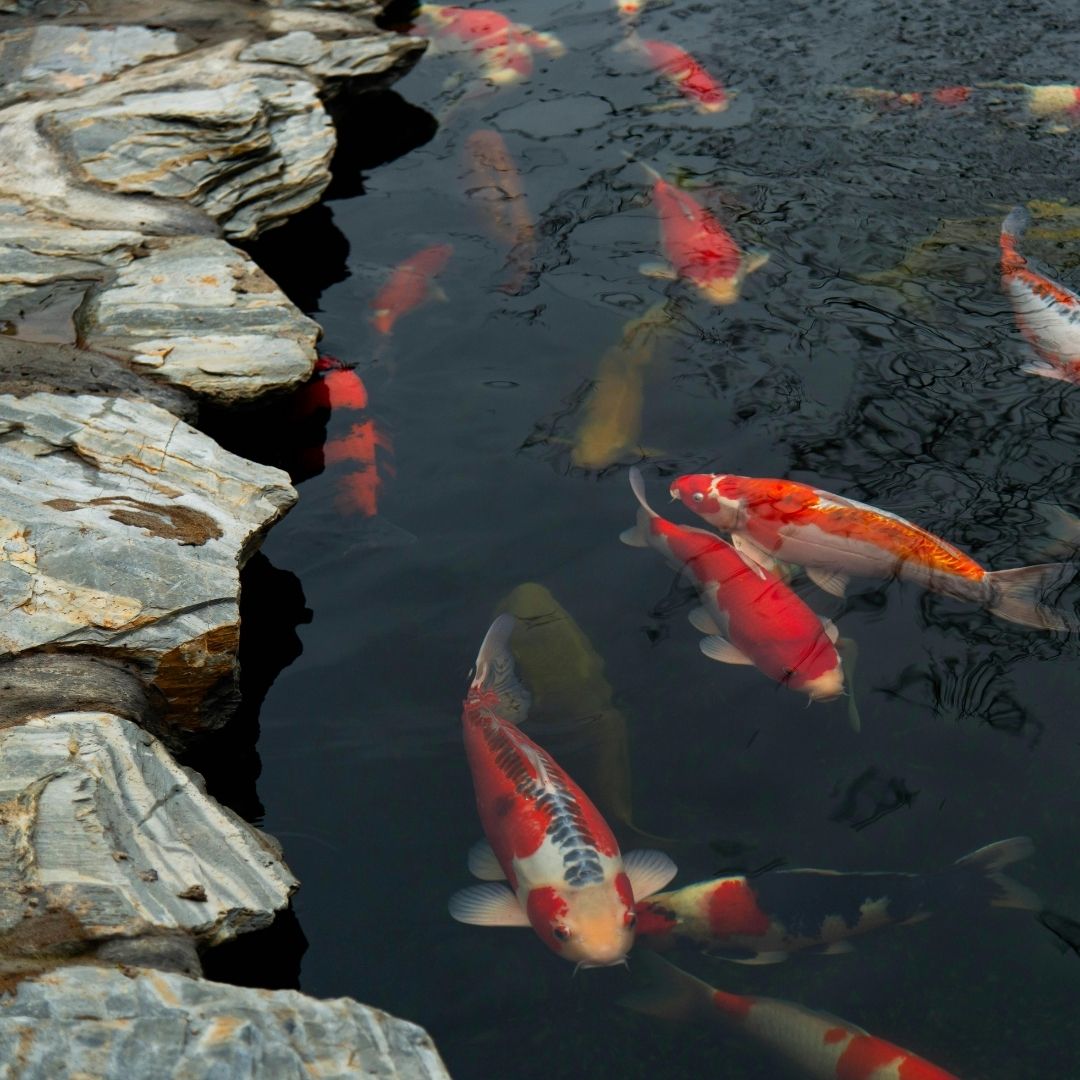
I had a customer call last week and he had lost some fish this winter. First thing when somebody tells me that, I’ve got to ask a lot of questions.
Are you running aeration? I’m running 2 aerators. Okay, it’s an airstone at the bottom of the pond, because you can super cool a pond by pumping oxygen like 18 degree air or 10 degree air all the way down to 50 degree water. And he said, no, the airstones are only about a foot deep in the water. I’m like, okay, that’s perfect.
I said, what has changed with the pond? And he said, nothing. I said, okay. How many fish are in the pond? And he had about 600 inches of fish total in a pond that should have only had 200 inches of fish.
Now how do you measure inches of fish? It’s an approximation. If you say, I’ve got 20 fish in there and they’re 5 inches long, I’ve got 100 inches of fish. And the rule of thumb that we try to follow, now a good filter system, you can go way above this, but an average pond with an average filter system you’re allowed 1 inch of fish for every square foot of surface area.
So a 10 by 10 pond could have 100 inches of fish. And the reason we use those, and they’re general rules, again filter systems and other things can affect it. If it’s in full sun, it holds less oxygen, so you’re going to lower those numbers. You’re running dual aeration, and so what we came up with was, I’m always like, you’re troubleshooting basically. You’re trying to figure out this mystery, and you’re asking these questions to try to answer his question.
So what we ended up deciding was, his pond had changed. Even though nothing changed, he hadn’t added anything different to the pond, no new runoff water was entering, any of those things, no fertilizer applications were made, all these other questions that we asked, no new water was added, because city water will have chlorine in it, there’s a lot of things that can happen. But when you have a major fish kill in the wintertime, it’s not insects, it’s not viruses, it’s not generally bacteria, it ends up being an environmental issue.
And low oxygen level is one of those things. As a fish grows, the pond never stays the same, because the fish are bigger. And so the amount of oxygen those fish are demanding out of the water column is also greater.
And a 4-inch fish is not twice as big as a 2-inch fish, it’s 5 times as big. And the reason is, is because the body mass, even though the length is the same, the body mass is 5 times as much. So the amount of oxygen that a 4-inch fish versus an 8-inch fish requires is significantly greater.
We help people with stuff like that all the time. I’ve had other customers come in in the wintertime that both had an exact same size pond. It was one of the plastic preforms, so we know it was identical.
And one guy’s fish didn’t make it through the winter and the neighbor’s guy’s fish did. He’s like, why? And I said, bring me pictures of both places. He brought me pictures in. Well, one guy had a brick house and he got reflective heat off that brick. The other guy had a vinyl-sided house that was a light color, did not get reflective heat off of it.
And so the power went out that year and when the power went out, one guy was using a heater and one guy was using an aerator. When the power went off, the pond froze solid on the top. Not the whole pond, just the surface froze solid. But no new oxygen could enter into the water, so the oxygen level starts to deplete very slowly.
And the one that was running the aerator, their fish lived because of the reflective heat of the house and the aeration. And the other one did not live because he suffocated his fish, basically. Before the power came back on, they’d run out of oxygen.
There’s a big time learning curve when you’re dealing with live aquatics. And we can help answer those preventative questions. If someone has a lot of money invested in fish, I always recommend running two aerators at the opposite end of the pond, and this is very important, plugged into two different GFIs.
And the reason you’re going to plug them into two different GFIs is if one aerator malfunctions and pops a GFI and they’re both plugged into the same thing, they both go down. And so redundancy becomes very important. I mean, I deal with some people that have $20,000 invested into the fish that are in their pond.
Questions? Email us at [email protected] or call one of our two locations: Portage (330-499-0101) or Everhard (330-492-1243).