Rhubarb & Maple Roots
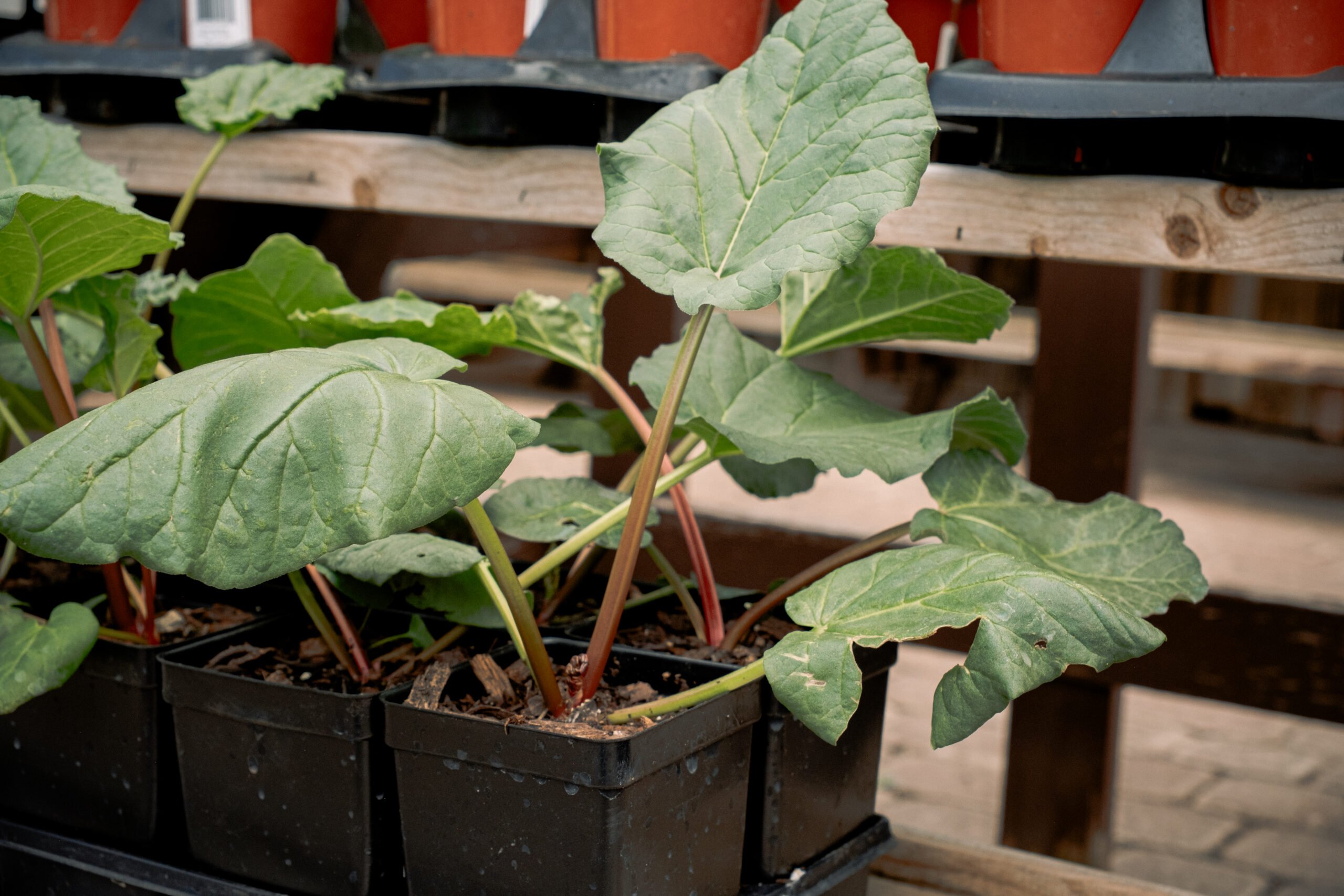
Rhubarb
‘I got to ask you guys, I don’t know if either one of you have ever grown this, but I’d be curious to know what it’s like to do it. Rhubarb, growing rhubarb. Is it hard?’
It’s very easy. It’s a perennial root. I mean, obviously, you harvest the stalks of it, but it’s like a tuber.
it just takes probably about, I’d say, like five years before you actually get a really decent big patch. But it’s very easy to grow. So you just want to refrain from allowing it to flower the first couple years, just because that allows the energy to be more into the leaves, which is where you want it to go. That’s where all the taste is.
You really just want to cut the flower off as soon as you start to see it coming up, because it does flower quickly. But I mean, mine’s gotten away from me before, and it doesn’t necessarily hurt the plant. It can make it smaller over time. You just want to refrain from allowing it to flower.
It’s a very easy plant to grow, I’ve always had it. So you kind of need a space where it’s not going to be like a focal point in your garden. The younger stalks are preferred when you harvest them, but you do want them to get a decent size. But I mean, really, you can harvest it whenever. It does get tougher and springier over time. Usually early June is a good harvesting time, because it’s very much mature, and there’s plenty to harvest. And you get a good abundance out of it.
Asparagus is kind of the same way, you really want those younger stalks. Yeah, you want to get that as soon as it’s popping up. It’s almost like a fern frond, you know, before it starts to flower out. That’s what you get.
Rhubarb is one of my very favorites. That’s my favorite pie. I grew up with it and always had it around. My mom always used it. It’s good when it’s got a lot of sugar and baked in a pie, paired with some strawberries.
Maple Roots
We got sent a picture of a Maple tree that has a lot of roots showing on the surface. What happens is, a lot of times when people plant a tree initially, we recommend putting a mulch ring on it, and when you water, if you water deeply, the moisture will go down through the mulch and into the soil, and the roots will chase that moisture deep.
When you water shallowly, meaning only for short periods of time, only the soil and the mulch itself gets wet at the very surface, and so a lot of times the roots will come up looking for it. Once it’s to that point, there’s not a ton you can do for it. I would keep that mulch ring. The picture that was sent in, that hasn’t been mulched in years. It’s time just to put a little fresh coat on there.
There weren’t any major girdling roots that I saw there. Most of them were headed out away from the trunk, and that’s really the key. You want the roots heading away from the trunk and not circling around it. He also said, ‘can I cut them up to make more of a bed?’ The smaller roots, yes. The crossing roots, you can cut those. Understand that it may stress the tree a little bit in doing so.
I try not to cut any of the larger roots, but if you’re going to make that bed larger, which is what happens a lot of times, we’ll start with like a little two-foot circle around a tree when it’s young, and as that tree ages, we want to take that mulch ring out just a little bit further. And by doing so, he’ll be able to feather that mulch down from the base of the tree where it goes into the soil out to the edge of the mulch bed. Right now it’s kind of humped because the roots came up in that area. And if you widen that ring, you can feather that mulch back over a longer area. When you get to a tree that size, you’re not really watering anymore. That tree’s on its own and generally should be fine. If you do fertilize, you can fertilize before you do your mulch as well.
Questions? Email us at [email protected] or call one of our two locations: Portage (330-499-0101) or Everhard (330-492-1243).