
So You Want A Pond, Where to Start?
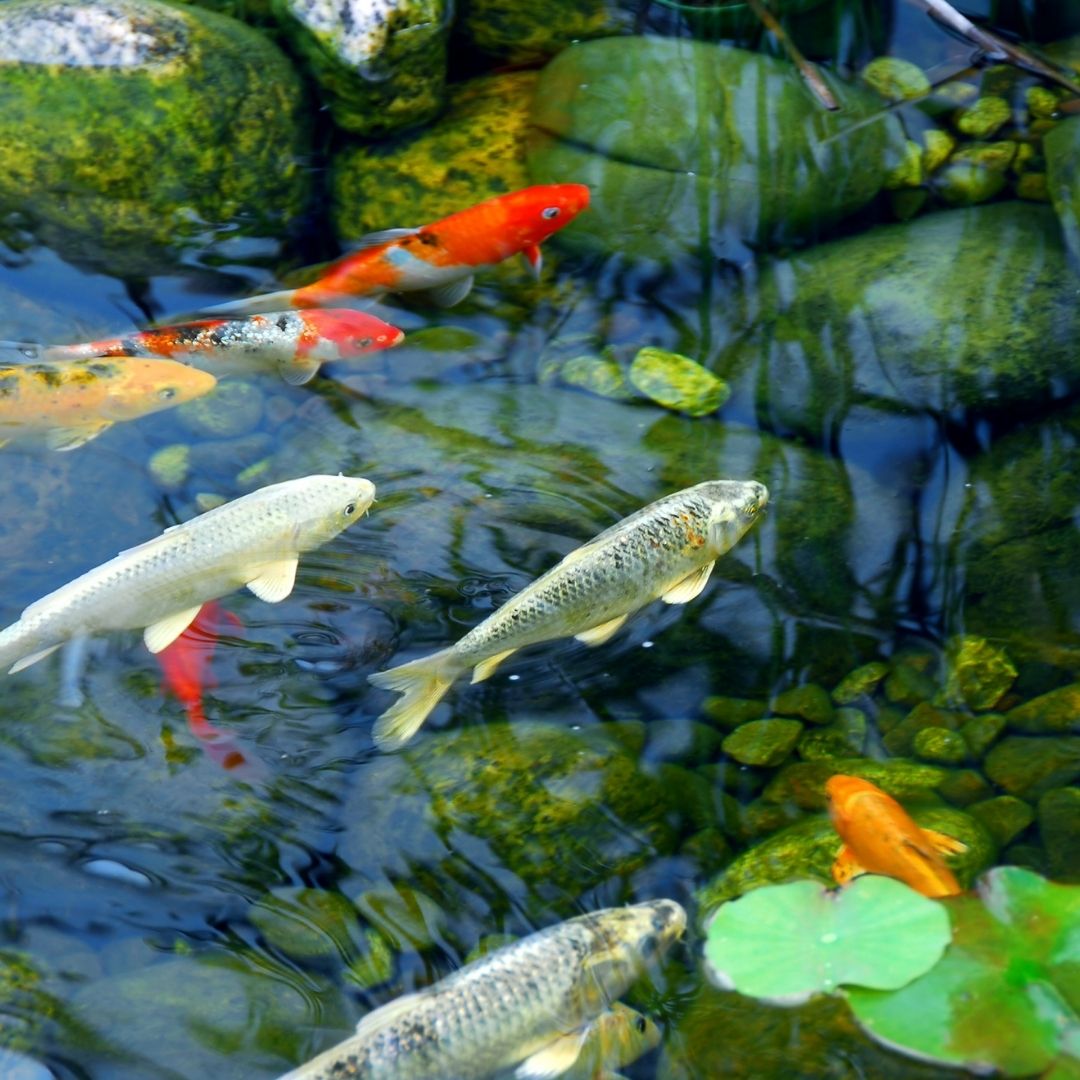
What’s the best way to start? If you’ve never done it and you want a pond with fish in it, the best thing is to do a lot of research. And so you’ll come into the nursery. We can show you the different filter options. Bring a picture of your site in, deciding how big you want it to be. And a lot of people don’t realize a medium-sized pond is much easier to take care of than a small pond.
It’s like a goldfish bowl sitting on your kitchen table. If you put one fish in that goldfish bowl on your kitchen table, that water gets scummy really quick. You put that same goldfish in a 55-gallon aquarium and that thing stays clean for a super long time, because the amount of waste and other things that fish is putting into the water, when it’s two gallons of water in that small bowl versus 55 gallons, the fish affects its environment differently. So we work with people to design stuff like that and help them along the way.
Liners and Construction
There’s a couple different options. Pre-formed, hard plastic ponds kind of have gone out of normalcy. That used to be how most people started, but when oil went up, you know, ten years ago, the cost of those preforms went up astronomically. And so what we started doing, we saw more and more people going into the rubber liner. And there’s different liners for ponds. There’s PVC based, there’s rubber liner based. The rubber will last 30-40 years in the ground.
We’ve only had a few of those liners ever rupture. Muskrat was one cause, and I think we did have a blue heron poke a few holes in one. But very rarely is there ever an issue with a rubber liner pond. And it’s a specific type of liner. It’s not a standard roofing liner. It goes through a purification process to pull out anything that would be toxic to the fish. So pond liner is specific to ponds, and roofing liner is specific to roofs.
And we’ll talk when people come in and we’re working them through the construction process. I mean, we go out and build ponds for people, but if it’s something they want to do themselves, we walk them through the steps that we do on a job site. They can bring pictures in the process and we can say, okay, this is what you want to do next. When you do this, watch out for this and make sure you do this. And so we’re kind of giving them pointers as they’re going through it.
Like when you excavate the pond, I like to see all the ponds with a sloped bottom. And what that means is everything is going to drain to one point when you eventually take all the water out of the pond and clean it. About every three to five years, and again, it depends on the environment, but about every three to five years we completely drain them, clean them, and then refill them.
If the bottom of the pond slopes to one area, you can put the sump pump down there, spray all the sludge down and it all runs to one spot. Versus if it’s a flat bottom pond, you’re kind of chasing it across the bottom with a hose. You’re always left with that little bit left, then you’ve got to carry a shop-vac down there. Just that little bit of recommendation saves a huge problem later on. It doesn’t take any longer in the excavation process.
Another thing we’ll talk about is the filter system is where the pump sits and where the water is returned. Like if you’re building a waterfall, you want the water to come out of one side of the pond and then be put back into the pond on the other side, so all the water cycles through the filter system. If you put the pump right underneath the waterfalls, that water is really clean, but the rest of the pond is stagnant. So there’s just a few little things like that. And then we’ll also take a look at where there is electricity available. That can change the shape or the contour of the pond.
Adding Lilies
Do you want to have water lilies? We’ll try to create an area to plant water lilies where the water is a little more still. The reason we want that is because if the lily pads are in rippling water, they don’t last as long. They’ll come up to the surface, but they may only last three to five days instead of 14 days, so the lilies never get a chance to get really thick and full.
The other thing we’ll talk about when you’re planting water lilies is you want the crown of the plant in the water lily pot about 12 inches under the surface. The reason we want it that shallow is that the lily pads will come up from three feet deep, but the flowers sometimes only come up 12 to 18 inches. We want the flowers to be able to break the surface of the water, open up and flower.
People that have them in pots, a lot of times we’ll set them down in the deep part in the winter. Then when we warm up in the spring, bring them back up to a shallow shelf where they’re only six inches under the water. The reason we never plant permanent ones six inches under the water is sometimes we can develop six inches of ice and we don’t want to freeze that too much. At a foot, we generally aren’t going to freeze our little ponds up at a foot deep.
Questions? Email us at [email protected] or call one of our two locations: Portage (330-499-0101) or Everhard (330-492-1243).