What’s Happening to My 20 Year Old Boxwoods?
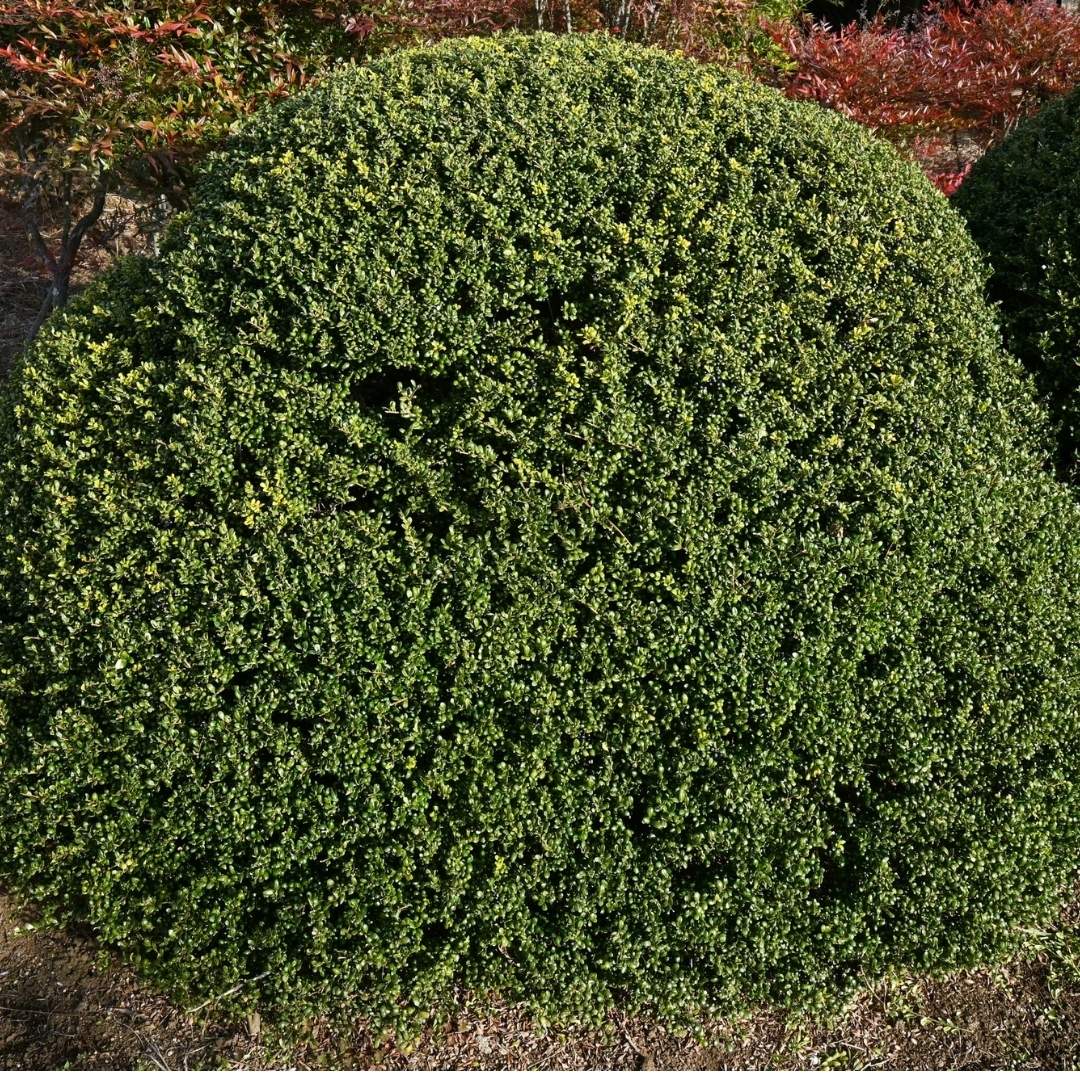
We have an email from Rita. She says, ‘20-year-old boxwoods treated with wilt stop every year. They are always beautiful in the spring. Once again, they were treated with wilt stop on a mild day about a week after Thanksgiving. What can we do to bring them back to good health?’
And then she sent the second email with the pictures of them. The two of them for sure should come back. They just need a little bit of fertilizer. I would put down that all season fertilizer. It’s going to feed it for six months and it’s kind of like an IV for the plant just to help bring it back around. The one at the far end is pretty bad. There’s not a lot other than fertilization you can do at this point.
It’s very important with evergreens. If you have evergreens, even if they’re fully established like these 20-year-old boxwoods, if we have a really dry August, September, October again, when you do the wilt proof in the late fall, you want to soak that soil. You want the soil to be wet going into winter, not dry.
And even though we had a couple of rains in November, it really didn’t get the moisture down deep in the soil. So a good heavy watering, when you do that wilt proof, thank goodness she did the wilt proof because without that or the wilt stop, they wouldn’t have probably made it at all. Now plants do have a course of life as well, and these may be getting close to the end of that course of life.
If it looks like they’ve been sheared pretty heavily for quite a few years, that always stresses a plant. And if you haven’t been feeding them as you’re shearing them, it’s harder and harder each year for that plant to recover. So I would say right now, if you want to do what’s best for the plant, you just want to do some fertilizer, the granular fertilizer on it right now, and then it’s kind of a wait and see mode. If it does not flush back out, then it may just be time.
We saw a lot of burn on boxwoods this year. We had a pretty real hard Ohio winter, which we haven’t had in quite a few years. So a lot of the evergreens we’re seeing some damage on, and a lot of the damage that happened happened because the roots were dry when it froze in the fall.
Some of it’s winter wind damage as well. But if the plant was moisture deprived going into wintertime, it’s a lot harder for them to survive that really cold, intense wind in the wintertime because there’s no extra moisture in the root system, the sap system, all of that’s kind of dehydrated. And so when the plant’s dehydrated going into winter, it’s a lot harder for it, if we have a hard winter, to come back.
It’s a process all the time. It’s not just like a plant, forget it kind of thing. That fertilizer really does help. It lasts for six months. Most of the granular fertilizers last four to six weeks at best. So this is something that you can put down once and every time it rains or every time you water, it releases a little bit more into the soil and it helps make it less work for you. Because if you’re anything like me, I can do it once in the spring. I’m always really good about that.
But then I’m like, when did I do that last? And all of a sudden it’s August and I haven’t done it in two and a half months. And I should have done it a month and a half ago. So doing it once with this fertilizer and the cost of the fertilizers, the same price is the stuff that lasts six weeks. So it doesn’t make sense not to use it.
And we had an exceptionally dry season last year. We really didn’t get much rain even in the fall. Not enough to, especially for something that large, something fully mature like that. They’re going to use a lot of moisture.
Questions? Email us at [email protected] or call one of our two locations: Portage (330-499-0101) or Everhard (330-492-1243).