Diseases Going Around on Evergreens, Blue Spruce, & How to Avoid
We have Joe in North Canton, who asks, ‘Is there disease going around right now that’s attacking evergreens? I got a blue spruce from your nursery up there about three, four years ago. It’s a baby blue. I have no damage on the blue spruce, but I have some other evergreens. They’re about 25 feet high. I noticed a couple other ones in the neighborhood started turning brown, and now they’re completely shot.’
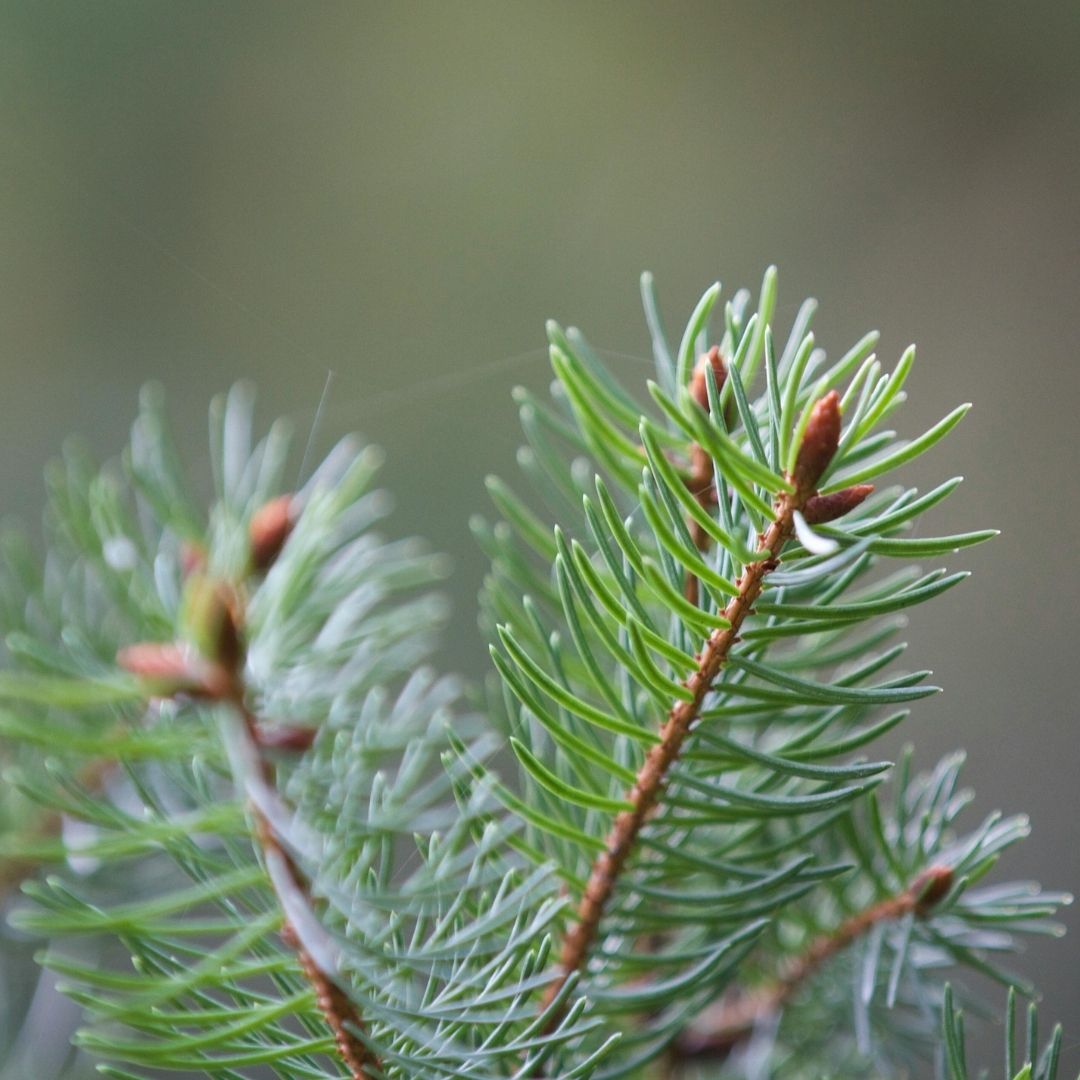
So there are a couple different things going on, and it’s mostly with the blue spruce. There are some other things that can happen to some of the long-needled pines as well, but the blue spruce, there’s a needle cast and a couple other different diseases that are going on with the blue spruce.
Ten years ago, it was probably one of the most bulletproof evergreens we sold, but this disease has since come up out of the Carolinas and is now established in Ohio, and it’s not great. It doesn’t really seem to affect the green needle spruce so much. It’s more the blue spruce that it targets. The green spruce have a waxy cuticle on their needle, and so the fungal spores can’t set in.
So baby blue is one of the resistant strains. It’s not impervious, but it is resistant. If you have a blue spruce of any type, whether it’s the one of the resistant strains or one of the old-fashioned strains, try to make sure that if you’re sprinkling the lawn or if you have irrigation in your flower beds, you do not want moisture spraying on the foliage of a blue spruce.
It’s going to encourage that fungus to happen. So a lot of times we’ll set up our yard sprinklers, and they’ll catch some of those. Sometimes those trees will catch some of that excess moisture, and it can actually contribute to the problem instead of helping the plant.
So what I want you to do is take a picture of the area that’s going from blue to brown, and bring that picture in. We have seen some winter damage this year that has shown up on the blue spruce. It’s not really common, but we have seen it because we did have a pretty good winter, and we had a really dry fall going into winter, which is conducive to some problems. So let’s make sure that’s what it is before we jump to any conclusions.
That picture is worth a million words in our business. So bring that picture into either one of the two Rohr’s Nursery locations. Tyler and Zach are really good at things down there at Everhard, then myself and Garrett and Dave up at the Portage Store. We’ll be able to take a look at that and should be able to tell you what’s going on. Sometimes it could even be an insect issue, and we could take a look at that. We should be able to tell from those pictures. And if you want to take a small cutting, that’s an option as well. Bring that in where it’s going from green to brown.
So we’ll ask more questions when you come in. We’re also going to ask how many hours of sunlight that area gets. So think about that, because that’ll be one of the questions we ask. A lot of times evergreens are planted, and then the leafy trees that are nearby grow over a period of 10 to 15 years, and all of a sudden are shading an area that was initially sun. And so now all of a sudden that plant’s not in an area where it’s getting the sunlight it needs, and that causes stress.
Questions? Email us at [email protected] or call one of our two locations: Portage (330-499-0101) or Everhard (330-492-1243).