
When Do Dogwoods Bloom & Different Crossbreeds at the Nursery
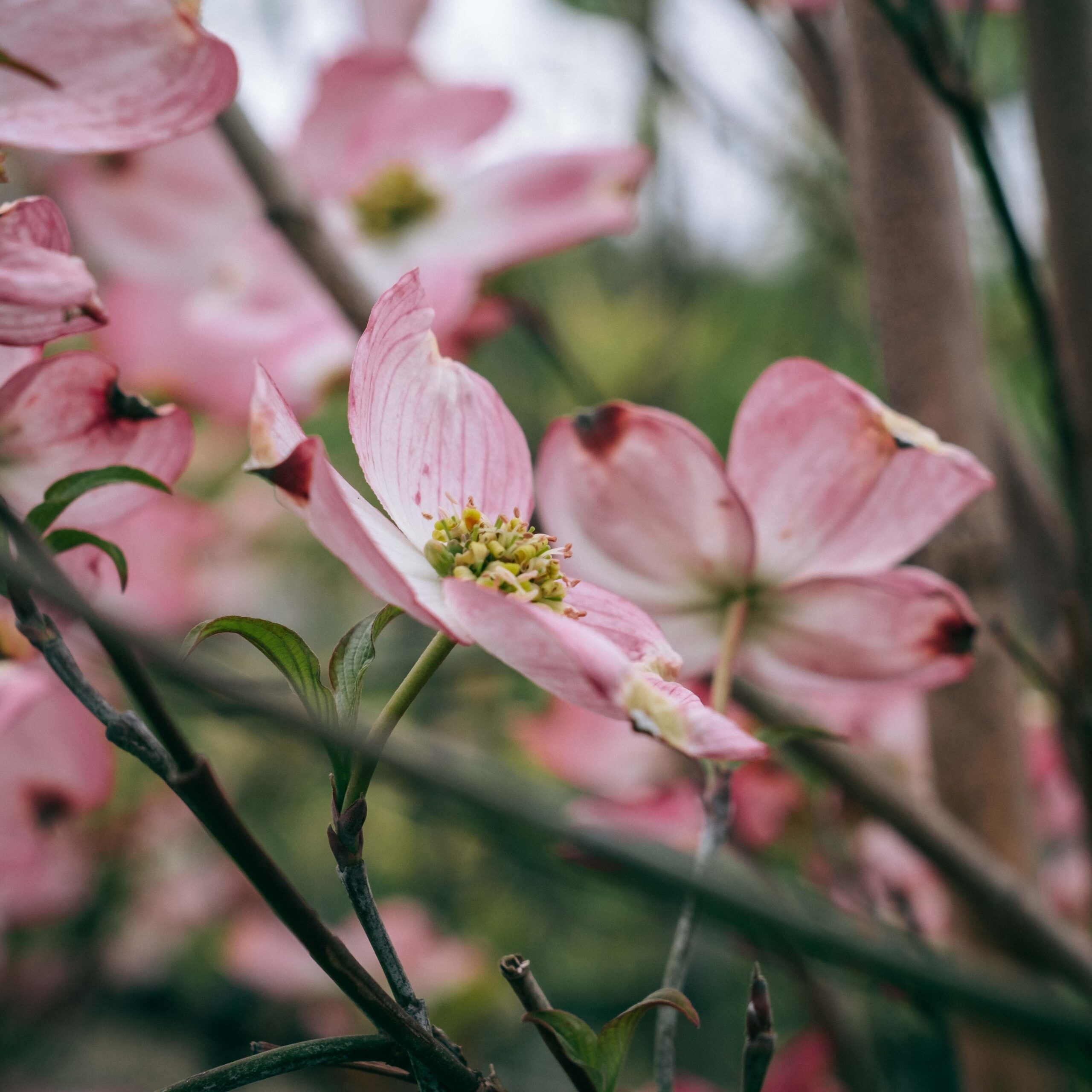
We were asked, ‘when do the dogwoods bloom?’
That’s a good question, because there’s different types of dogwoods. We have about 28 different species of dogwood at the nursery, so there’s a lot. Now, again, if you’d asked me 10 years ago, there were like four. They’ve really expanded that.
Any of the Kousa style dogwoods, whether it be Kousa or a Kousa cross, bloom about two to three weeks later, so you’re going to find those blooming in May to mid-May. The earlier blooming dogwoods, like your old fashioned dogwoods, those guys are going to bloom sometime in April. And a lot of our weather will determine that by a little bit.
But the reason they bred these other varieties is a lot of times the early blooming dogwoods, we get cold and it kills the blooms really quick. And so it’s a real short bloom time. If we go down below, you know, 28 degrees after those flowers have opened, it knocks the flowers off. So having a dogwood that blooms two or three weeks later is a huge deal.
The other thing is with the Kousa crosses, there’s one called Rosy Teacups, another one called Stellar Pink. These have very large blooms, blooms as big as a coffee cup saucer. So a lot larger blooms mean a later bloom. And so generally, if you miss that frost, you’ll get a three or four week flower time out of some of these trees, as long as we don’t go to 95 degrees in May, which usually we don’t. We’ll see that sometimes in early June, but we generally don’t see it in May.
So you’re able to enjoy that dogwood for much longer. The other thing with the Kousa dogwood is it’s disease and insect resistant.They picked up that trait. So they have these large flowers, they bloom two or three weeks later and they miss the frost and they’re naturally disease and insect resistant.
The old Kousa’s got like a big crunch berry on it. The birds like it. And some of them, they’ve tried to, through breeding, get rid of that fruit. Because it can be messy, and they seed. Through breeding, they’ve tried to eliminate the fruit on some of the varieties. Stellar Pink doesn’t fruit, and I don’t believe the Rosy Teacups fruits. Scarlet Fire is another one, but that will fruit. So it just depends what the customer’s looking for.
It just kind of depends, because some people want that fruit for the wildlife and that kind of stuff. But I understand it’s messy and it can seed. It depends where it’s at. There’s something for everybody. If it’s out in the yard, it doesn’t matter so much, but if it’s up near a patio or a walkway where there’s a hot tub or a deck or something, you just don’t want that mess there. Both options are available.
The other thing with the old-fashioned dogwoods is some years they bloom well. Some years they would not. So the Kousa’s cross dogwoods, they always bloom very consistently every year. Much less of an issue where one year they’ll be great, one year they’ll be terrible. They’re good every year.
There’s a white version called Venus that in a perfect growing environment, which I’ve only seen twice in 30 years because, I mean, it’s Ohio. Let’s face it. But that bloom will get 10 inches in diameter. It almost looks like a hibiscus bloom. It’s one of those where you’re like, what is that?
They actually cross the Kousa with the old-fashioned pink and with the old-fashioned white. So they have white and pink versions. The old-fashioned white was much, much hardier than the old-fashioned pink. You’ll see many more mature white dogwoods than pink dogwoods.
The most important reason is because where does everyone want to put a dogwood tree? Right in the middle of the front yard where it’s beautiful and it’s in the sun for 8 or 10 or 12 hours a day. That’s not where dogwoods grow. Dogwoods grow at the edge of a wood line. The old-fashioned ones like morning sun, afternoon shade.
Well, when they cross that with the Kousa, the Kousa can grow in full sun. So they got that huge value where we can put the dogwoods where we want them to be now and they’re going to thrive there. They’re not going to struggle. They learned how to fix it, so to speak.
Questions? Email us at [email protected] or call one of our two locations: Portage (330-499-0101) or Everhard (330-492-1243).